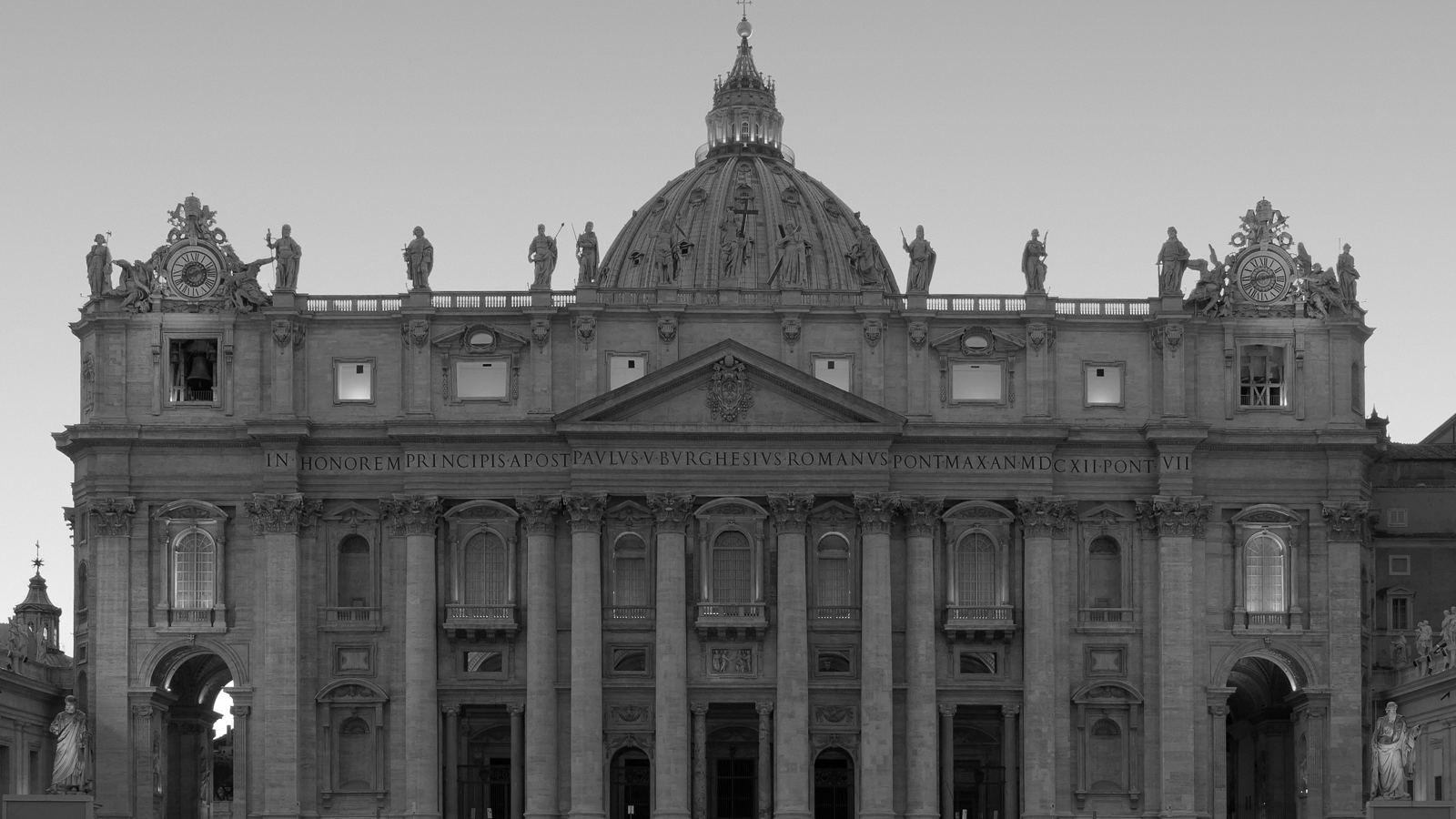
When Pope Leo XIV stepped onto the balcony of St. Peter’s Basilica, he inherited the weight of global Catholicism and the ledger of an institution slipping deeper into the red. Behind the pageantry of the papacy, the Holy See is facing a dual financial reckoning.
The first is a growing annual budget deficit—most recently clocked at $94 million. The second is a systemic $1.7 billion unfunded liability in the Vatican’s pension fund. Together, they represent the deepest financial vulnerability the Holy See has faced in a generation. And they now fall squarely on Leo XIV’s desk.
An Inertial Legacy
Pope Francis, for all his public devotion to reform, failed to meaningfully address either issue. In his final year, Francis appointed Cardinal Kevin Farrell to serve as the sole director of the pension fund. In a letter to the College of Cardinals just months before his death, Francis warned of a “serious prospective imbalance” in the pension system. It wasn’t breaking news. As early as 2015, internal analyses had flagged a funding gap of over €700 million. Still, intervention never materialized. That failure is now Leo XIV’s starting point.
The Vatican vs the Holy See
To understand the challenge ahead, it's necessary to distinguish between two entities often conflated: Vatican City State and the Holy See. Vatican City, the 120-acre sovereign nation, generates healthy revenue from tourism, stamps, coins, and museum tickets; it turns a profit. The Holy See, by contrast, runs a vast global bureaucracy: diplomatic missions, media operations, and religious administration. And it is hemorrhaging money.
For years, analysts have warned that the Holy See’s operational costs far exceed its recurring income. Patching this gap will require either a radical overhaul of its spending or a vast fundraising campaign. Preferably both.
A New Agenda?
Leo XIV brings to the papacy a resume more technocratic than theological. A former mathematics major at Villanova University, he served as Prior General of the Augustinian order, bishop of Chiclayo in Peru, and most recently as prefect of the Dicastery for Bishops. He’s managed sprawling institutions, worked under both leftist and right-wing governments in Latin America, and speaks fluent Spanish, Italian, and English. Unlike his predecessor, Leo XIV is a methodical administrator, with a temperament shaped by numbers. That alone may be the Church’s greatest asset in the coming fiscal war.
There’s also the matter of image. Leo XIV is a moderate conservative: doctrinally aligned with Francis on many fronts, but more traditional in tone. He has not yet publicly commented on Francis’ rulings on same-sex union blessings, but he has voiced strong opposition to abortion. Theologically, he is cautious. Economically, he is still a cipher.
Why the name Leo?
Pope Leo XIV draws his papal name from one of his intellectual heroes: Pope Leo XIII. In 1891, Leo XIII penned Rerum novarum, an encyclical that tried to thread the needle between socialism and laissez-faire capitalism during the Industrial Revolution. Leo XIII condemned socialist calls to abolish private property but also criticized unfettered markets that left workers in squalor. He supported labor unions and argued for just wages but rejected strikes and revolution. He saw wealth creation as a moral good, as long as it served human dignity.
It was, in many ways, moralized capitalism—market-driven but bounded by conscience. If Leo XIV channels that same vision, he may find it easier to speak to a donor class increasingly skeptical of Francis’ anti-capitalist tone. American and European philanthropists remain a key source of Vatican funding. Many were alienated by Francis’s rhetoric. Leo XIV, fluent in their language and more sympathetic to enterprise, could re-open that door.