In recent years, discussions around the future of the U.S. economy have shifted toward a surprising idea: leveraging military influence to reshape economic relationships. Dubbed the Mar-a-Lago Accord, this emerging concept challenges long-standing international norms and signals a possible turning point in how America engages with the world.
What is the Mar-a-Lago accord?
The Mar-a-Lago accord is not a formal policy or a signed agreement, but rather, a theoretical framework coined by economist Zoltan Pozsar to describe a potential shift in U.S. economic strategy—one that ties American military protection to economic concessions like accepting a weaker dollar and lower returns on U.S. debt.
The Mar-a-Lago Accord’s target: The United States trade deficit. While the U.S. has been running a trade deficit for decades now, this new framework reflects a change in how policymakers approach it. Previously, the attitudes towards the trade deficit were fairly neutral—it was something that needed to happen for the U.S. to keep serving its position as the global reserve currency.
However, as of recently, certain economic indicators—including the push for domestic manufacturing under the Inflation Reduction Act and increasing efforts by countries like China and Russia to reduce their dependence on the U.S. dollar—point to a pushback on this once widely accepted idea. This growing unease reflects a broader change in how economic policymakers view global trade. Rather than treating the U.S. trade deficit as the cost of global monetary leadership, some now see it as a strategic liability. It is within this context that the Mar-a-Lago accord begins to take shape.
At its core, the Mar-a-Lago accord envisions a dramatic realignment of global trade and finance, one in which the United States leverages its military and economic power in an effort to reestablish its competitiveness in the global market. The implications of the Mar-a-Lago accord are as follows: Under the current global financial system, the US maintains its position as the issuer of the world’s reserve currency, a role that has historically kept the nation in a trade deficit. This deficit kept the dollar strong and allowed other countries to export their goods to the U.S while recycling the surplus into U.S assets.
However, the Mar-a-Lago Accord challenges this model. It suggests a deliberate weakening of the dollar to make American exports more competitive and reduce reliance on foreign manufacturing. By enforcing military protection and economic cooperation, the U.S. could pressure allied nations to accept lower returns on U.S. debt, while also moving capital flows away from Wall Street and back toward Main Street.
If executed well, these moves could subsidize U.S. borrowing and lower debt servicing costs. The ultimate goal would be to re-industrialize the American economy, restore blue-collar jobs, and reassert U.S. hegemony not only through defense but also through domestic economic strength.
Global implications
If implemented, the Mar-a-Lago Accord would mark a dramatic realignment in how the United States engages with the world economically. One of the most immediate implications would be a strain on long-standing U.S. alliances. By tying military protection to economic concessions, the Accord pressures allies such as Japan, Germany, and South Korea. The transition away from cooperation toward more transactional relationships undermines trust in the U.S. as a stable partner.
This also signals a broader retreat from globalization, potentially accelerating economic fragmentation. As the U.S. turns inward and adopts protectionist policies, other countries may follow suit or form new regional blocs, bypassing U.S. leadership altogether. This could create a more unstable global economy.
More fundamentally, the Mar-a-Lago Accord represents a break from the logic of the current international order—one that has long been shaped by the Triffin Dilemma. This dilemma presents a paradox: the United States can either stop running balance of payments deficits, or it can continue supplying the world with dollars to fuel global growth.
Choosing the first option would reduce liquidity in the global financial system, potentially triggering a contractionary spiral and widespread instability. But, the latter option—the path the U.S. has historically chosen—means running persistent deficits that erode the dollar’s long-term value, increasing debt, inflation, and eventually undermining confidence in the U.S. as the issuer of the global reserve currency.
In both cases, instability is inevitable—the heart of the Triffin dilemma. The Mar-a-Lago accord offers a kind of exit strategy: weaken the dollar, restore industrial competitiveness, and make others bear more of the burden of maintaining global stability.
But such a transition comes with risks. Countries could begin diversifying away from the dollar, accelerating a process of de-dollarization that has already begun among emerging economies.
Policy comparisons
While the Mar-a-Lago accord is not a formal agreement, its underlying logic invites comparison to earlier efforts like the Plaza Accord (1985) and the Louvre Accord (1987).
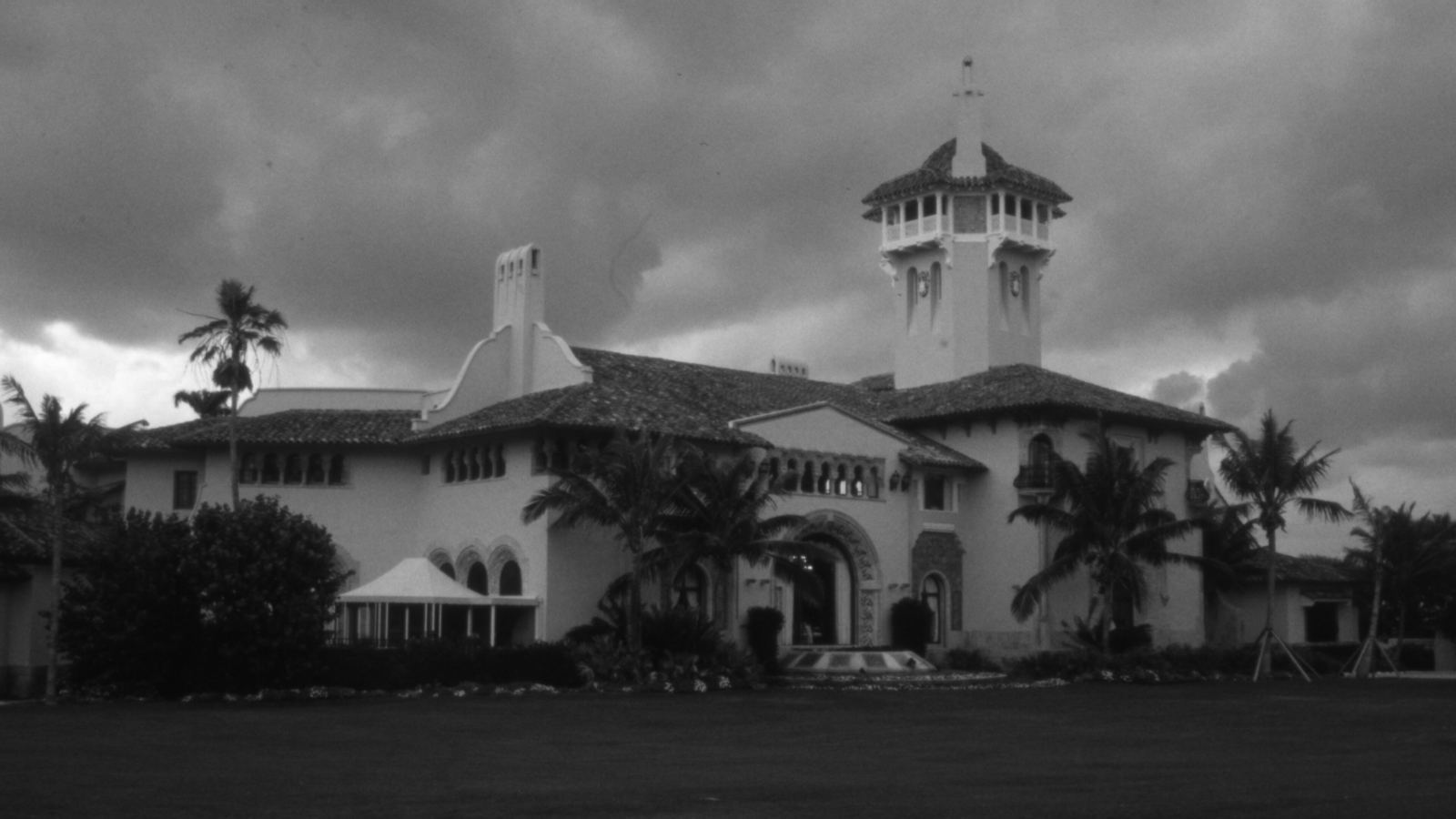
The name “Mar-a-Lago” is a nod to both the fact that it stemmed from the Plaza accord and also its connection to Trump-era politics—referencing Mar-a-Lago, President Trump’s Florida estate. The Plaza Accord was a coordinated move by the U.S., Japan, West Germany, France, and the U.K. to weaken the U.S. dollar to correct America’s growing trade deficit.
The Plaza Accord, unlike the Mar-a-Lago Accord, was multilateral and rooted in mutual economic interest. It reflected a postwar world order where major economies worked together to manage imbalances through diplomacy and shared responsibility.
The Louvre Accord followed soon after, aiming to stabilize exchange rates once the dollar had already depreciated—again reflecting a shared commitment to economic stability.
In contrast, the Mar-a-Lago accord is unilateral and transactional. Instead of seeking balance through collaboration, it leverages defense and geopolitical power to pressure allies to comply. It reflects a departure from the cooperative frameworks of the previous two accords and signals a shift toward realpolitik, where strength replaces consensus.
Whether or not it materializes, the Mar-a-Lago Accord offers a provocative lens through which to understand the shifting dynamics of global power, economics, and American strategy.