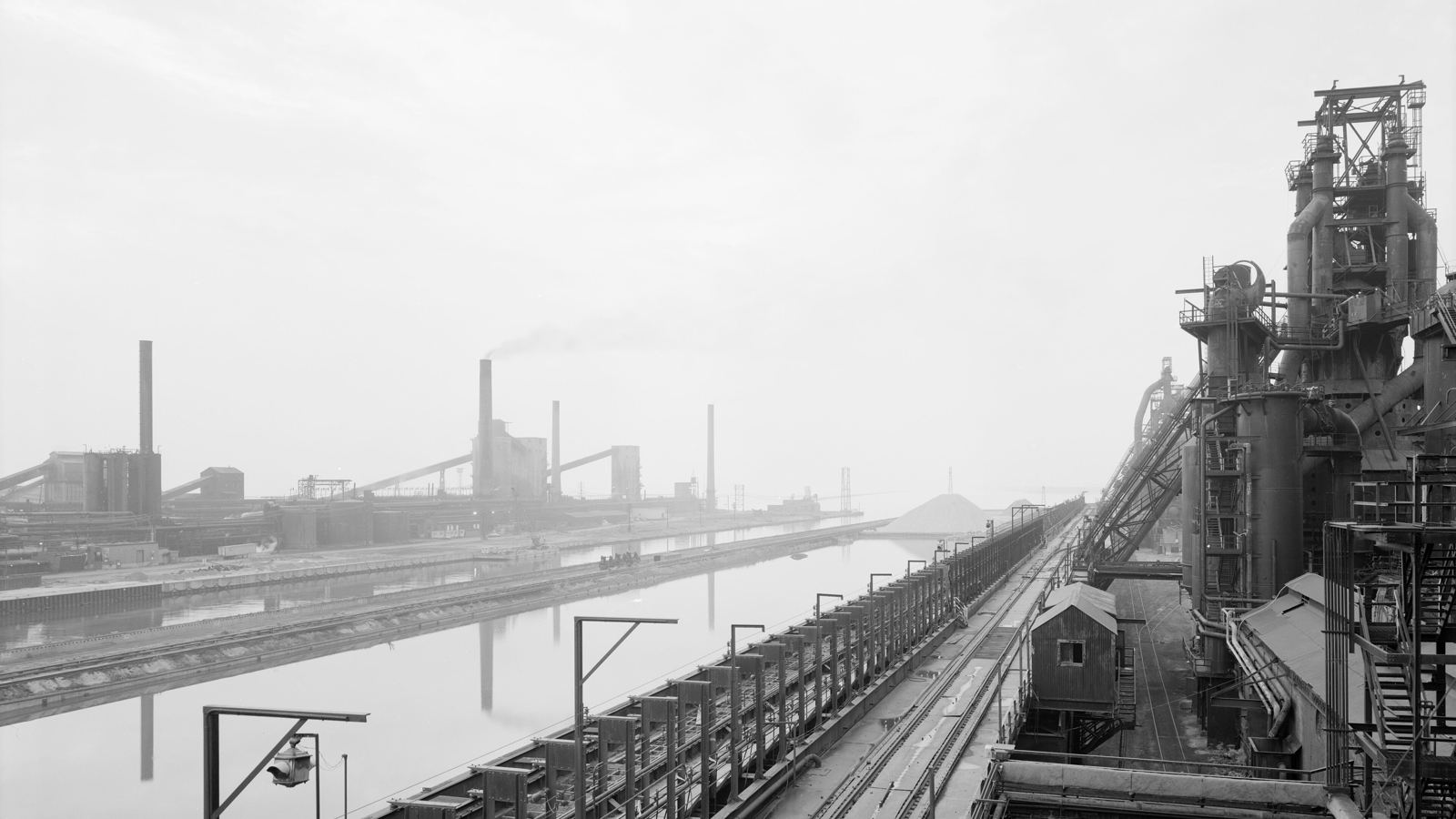
For over a century, the U.S. Steel company has been a symbol of American industrial might. Today, it is now under foreign ownership. After undergoing a $14.9 billion acquisition deal by Japan’s Nippon Steel, concerns regarding national security have circulated throughout the U.S. The U.S. government, however, hasn’t completely surrendered their steel company thanks to a rare “golden share” that was granted. Washington will still hold influence over the company’s actions through veto power, marking a new era of strategic state involvement.
The Early Origins of U.S. Steel
In 1901, J.P Morgan’s decision to merge several major steel companies like Carnegie Steel, Federal Steel, and American Steel & Wire would create the world’s first billion-dollar company, the United States Steel Corporation. Through vertical integration and the timing of both World Wars, the U.S. Steel company achieved rapid expansion, eventually acquiring some of its largest rivals like Tennessee Coal and Iron and Railroad Company in 1907. With these mergers, however, the U.S. government opened an antitrust lawsuit against U.S. Steel in 1911 for attempting to reduce competition and for exhibiting monopolistic characteristics. In 1920, the court decided that the major steel company was not, in fact, violating the Sherman Antitrust Act. Since then, U.S. Steel has continued to expand and dominate the steel industry, shaping our economy as we know it today.
The Nippon-U.S Steel Deal
With the first announcement in December 2023, the Japanese firm Nippon Steel has recently completed the $14.9 billion purchase of the 124-year-old American steel company, made up of a payment of $55 per share and the responsibility for US Steel’s debt. During Joe Biden’s presidency, former President Biden had blocked Nippon Steel from purchasing the US company in January 2024 due to national security concerns and supply chain risks. Later, President Donald Trump ordered a memorandum to re-review the proposal, signing an executive order to approve the merger and close the acquisition in June 2024.
Trump shared on his social media platform that, “this will be a planned partnership between United States Steel and Nippon Steel, which will create at least 70,000 jobs.” According to US Steel, however, they believe that this change can be expected to introduce 100,000 new jobs.
According to the deal, United States Steel will also maintain headquarters in Pittsburgh and keep members of the board in the corporate structure, including the chief executive, and preserve its name. In addition to these terms, everything will continue to be “mined, melted, and made in America for generations to come,” reported Nippon and US Steel in a statement.
As for the Nippon Steel workers, it is still uncertain as to what their future holds. However, both companies have expressed interest in keeping employees, and Nippon Steel announced that U.S. Steel workers are set to receive a $5,000 closing bonus due to the deal.
However, many concerns have surfaced regarding national security, job security, and implications for the future of the U.S. steel industry, especially when under foreign ownership. This case also turned politicized, as it occured around the 2024 presidential election and has played a role in swing states through its large factory locations like in Pennsylvania. Proponents for the acquisition were the U.S. Steel management and employees while the largest opponent was the United Steelworkers Union (USW) who believed that the steel company should be domestically owned and operated.
The USW’s primary concern is based on a fear that foreign-ownership might prioritize its own interests over American workers, which could potentially result in job losses and layoffs. Additionally, they also argue that Japan’s ownership might weaken the domestic steel industry, making the U.S. increasingly more reliant on foreign sources for critical materials. While the U.S. Steel and Nippon Steel companies have stated that no jobs would be lost through the transaction, their statement was nonbinding. Additionally, Nippon Steel has attempted to resolve the USW’s concerns through private communications with the union directly.
What is a Golden Share and Why Have One?
One of the terms of Japan’s proposal was that the U.S. government would be granted a “golden share.” A “golden share” grants the U.S. government significant control over the merged entity, specifically in regards to strategic and operational decisions.
The term “golden share” is not new, but it is unusual for foreign investors to grant such weighted control to the host country’s government. Historically, this arrangement has been granted for Volkswagen, coined the Volkswagen Law (VW Law), to protect their company from hostile takeovers and maintain a government influence over the company. Another past example was the golden share given to the UK government for control over the British Airports Authority’s (BAA) Heathrow Airport.
In the context of the steel companies, the government, and more specifically, the U.S. president, holds veto power over key decisions in order to ensure the company stays aligned with U.S. interests. The U.S. can veto potential relocations of the company’s headquarters, transferring jobs overseas, name changes, or any future acquisition of a rival business. The “golden share” also played a large role in the success of the acquisition, easing the fears over national security risks by giving the U.S. more influence than a typical minority shareholder position.
What’s to come of the New Steel Partnership?
Looking forward, after investing $14.9 billion into U.S. Steel by 2028, Japan plans to build new electric arc furnaces in the U.S., upgrade existing facilities and potentially build a new steel mill. They will also direct $2.4 billion into U.S. Steel facilities in Pittsburgh, including building a new research and development center at Carnegie Mellon University. Although one of the U.S.’s industrial giants is now in foreign hands, the golden share ensures that its future decisions will still pass through Washington and secure the U.S.’s economic future.