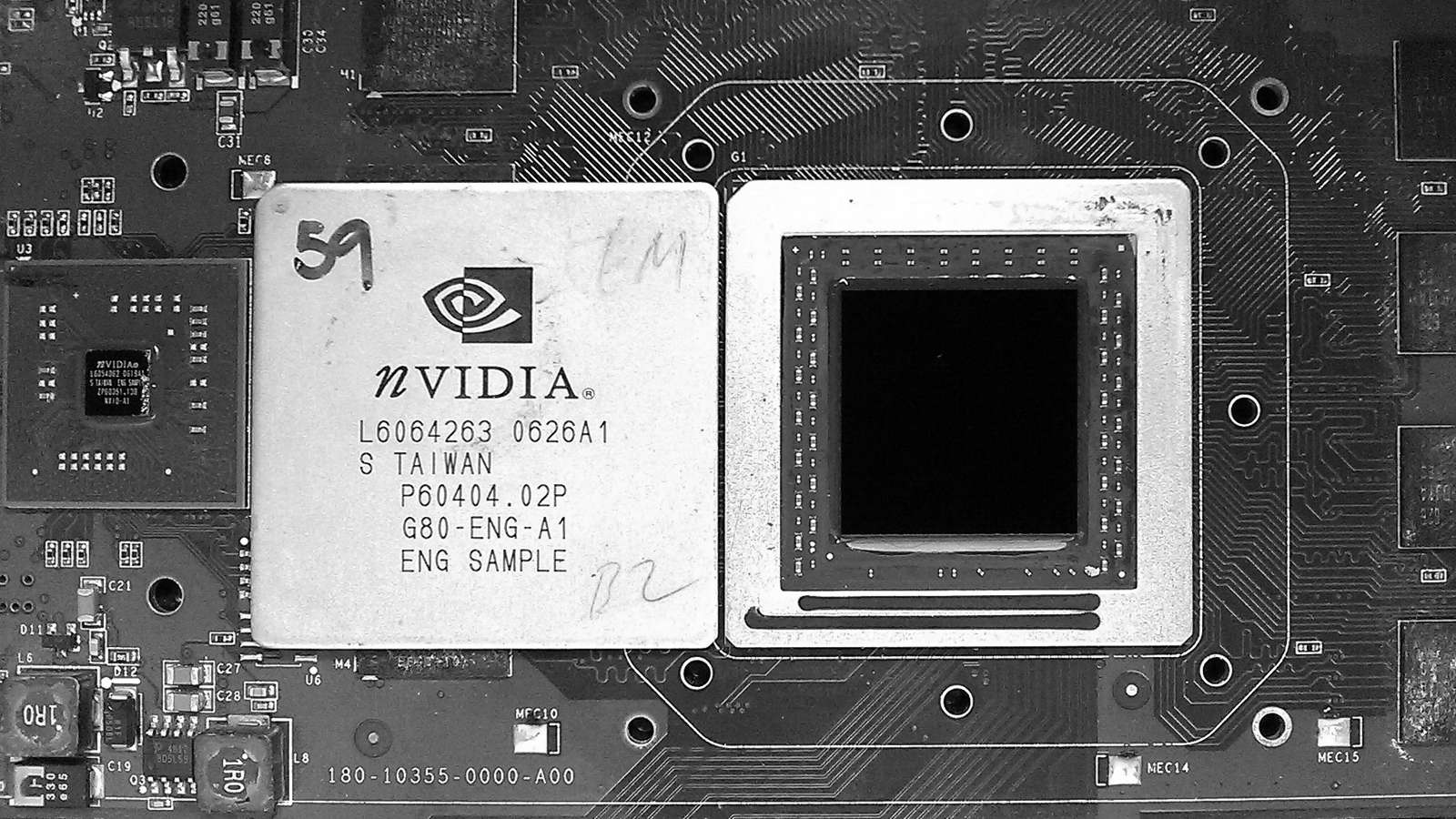
In the global race for artificial intelligence supremacy, hardware is the new battleground. While much public perception is stuck on LLMs and software breakthroughs, the true chokepoint lies within the powerful chips that train and run these models. At the heart of this race is NVIDIA, whose GPUs have become the gold standard for AI development worldwide. But, as tensions between the US and China escalate, access to this hardware has moved from just a commercial concern to a matter of geopolitics.
Why does AI hardware matter?
AI hardware, such as NVIDIA’s A100 and H100 GPUs are critical in training large AI models. According to NVIDIA’s official website, these GPUs are high performance chips specially designed for data centers and AI workloads. The A100 chip is created through Ampere architecture and is a versatile option known for its multi-instance GPU capabilities. This means that it's more suitable for virtualized environments and mixed workloads. The H100 chip is built using Hopper architecture and is more suited for the creation of LLms and transformer-based architecture. Coincidentally, the use cases of these chips happens to be technology that both the United States and China are currently vying for, making NVIDIA’s chips one of the most sought after technology in the world.
The U.S.-China chip Cold War
But, like many things, the amount of chips created is severely limited due to the difficulty of creating these advanced GPUs. Even more so, these chips have many export restrictions that the U.S. government has imposed for national security concerns. Not surprisingly, most of these restrictions target China in the hopes of putting the country farther behind the United States in the AI race. The US has even gone as far as to allow NVIDIA to only export a “China-compliant” variant of the H100 chip, known as the H20 chip. This new chip was spearheaded by NVIDIA’s CEO Jensen Huang, who basically had to beg the government in allowing NVIDIA to resume its sales of H20 chips to China (CNBC 2025). Huang has also tried to create low-performance chips like the A800 and H800 for the Chinese market, but these chips were also restricted by the US.
These heavy restrictions can lead to dire consequences for Chinese tech firms like Alibaba and Baidu, who rely on these chips to resume daily operations. China has already started to make provisions against these restrictions by creating chips in-house. Companies like SMIC and Huawei have developed chips that, according to Jensen Huang on Bloomberg News, are of equal caliber to the A100 and H100 chips (Bloomberg Television 2025). This mirrors how DeepSeek shocked the global AI community by building a large language model rivaling OpenAI's offerings—demonstrating that China is rapidly closing the technological gap despite limited access to high-end hardware.
What role does Jensen Huang play in this?
With compliance issues and political strife at every step, Jensen Huang probably has the hardest job in all of this. Not only does he have to comply with US law, but through those restrictions he also has to retain customers on the Chinese market. If the U.S. continues to impose heavier restrictions, it would not be surprising for NVIDIA to let go of their Chinese customers.
Huang has recently been making public comments on the current situation regarding AI chips. According to interviews conducted by The Economic Times, Hunag has described his situation as “quiet diplomacy backed by smart business and cultural finesse (The Economic Times 2025). With the creation of the H20 chip, Huang is optimistic about the relationship NVIDIA has with China over the AI market.
Unlike NVIDIA who is trying to seek workarounds to export restrictions, companies like Palantir have taken a different approach—avoiding Chinese technology altogether and building its platforms independently. Palantir’s CEO, Alex Karp, has even stated that Palantir will start to advise clients to steer clear of Chinese technology including DeepSeek AI models (Reuters 2025). This signals a strategic shift—one where some companies are not just trying to navigate around geopolitical boundaries, but conceding to them by aligning business practices with national security priorities rather than challenging them.
As nations tighten their grip on AI hardware, the future of innovation may depend not just on who builds the best models, but on who controls the chips that power them.