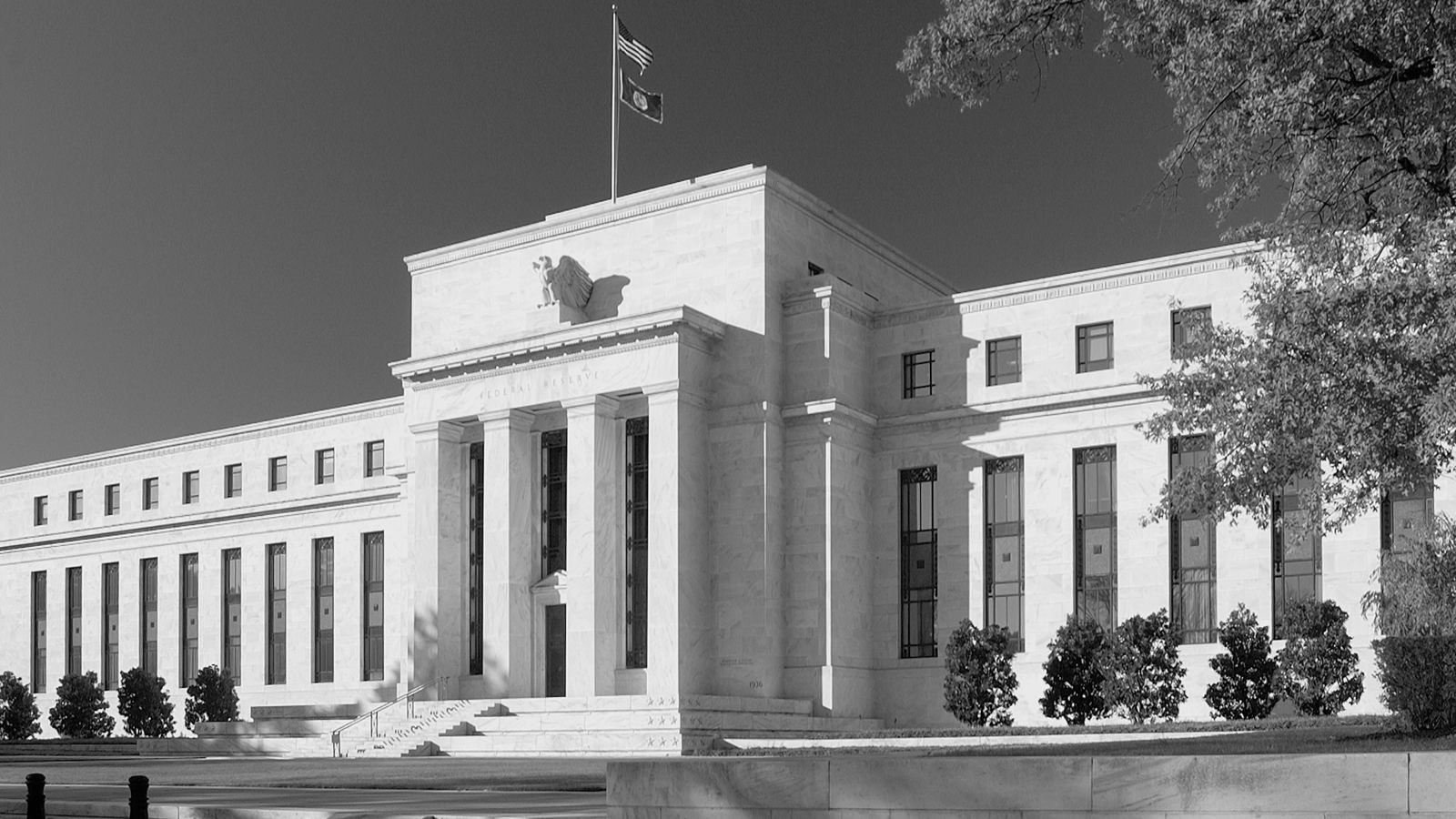
On Wednesday, July 30, 2025, the Federal Reserve left its short-term interest rate, or the federal funds rate, unchanged at a range of 4.25% to 4.5% for its fifth consecutive meeting. This decision faced two dissenters, Christopher Waller and Michelle Bowman, both appointed by Mr. Trump, who voted to cut the target range by a quarter of a percentage point.
While interest rate meetings always come with a healthy dose of discourse, this meeting saw one of the biggest disagreements in interest rate decisions since 1993, when two Fed governors dissented.
Christopher Waller, a hawkish economist focused on tight monetary policy and controlling inflation, broke from the consensus to argue that interest rates should be moved from moderately restrictive to a neutral rate. While Waller has been floated as Trump’s pick to become the next Fed chair, his rationale is different from Trump's.
Recent data—especially real GDP growing at a tepid 1.6% this year and persistent tariffs potentially leading to further deceleration—indicates that the economy may be slower than expected. According to Waller, central banks should see that tariffs, or one-off increases in price level, do not cause inflation beyond temporary effects, and the Fed should lower rates to avoid choking the economy. To him, today’s interest rate range is tighter than necessary, and he noted that the labor market, while normal on the surface, may be more fragile underneath with increasing downside risks.
Fed Governor Michelle Bowman offered a similar rationale, highlighting what she described as the risk of a less dynamic labor market and the lagging effects of a too-tight policy that may tip the economy into slowdown or even recession. While she acknowledged that inflation is not fully at the 2% target yet, she argued that it is considerably closer after stripping out tariff effects. Both emphasize that the labor market continues to be strong at full employment as a rationale for the market not being at risk of overheating and that the effects of tariffs will not create a persistent shock to inflation.
Still, Fed Chair Powell is taking a more cautious stance. Aside from 2020, monthly job gains have been the weakest since 2010, after which the world was licking its wounds from the Great Recession. Nevertheless, Powell describes the labor market as “solid” and consistent with maximum employment, with job gains averaging 150,o00 during the past three months, unemployment remaining low at 4.1% and wage gains outpacing inflation. In other words, Powell doesn’t see an immediate reason for cuts.
Even as economists are seeing the return of a K-shaped economy where higher income classes are driving growth while the middle- and lower- classes are struggling, Powell pointed to data from credit card companies to say that consumers remain robust overall. Yet with the myriad of new tariffs imposed, there is increasing friction between businesses and customers. Many firms intend to pass tariff costs onto buyers, but after the recent inflation surge, they may not be able to. Consumers are tired and wary of paying higher prices, and businesses might not have as much pricing power as they’d like.
The Fed Chair put the impact of tariffs on core inflation (an inflation gauge stripped of food and energy prices, which tend to be extremely volatile due to weather shocks) at 0.3-0.4 percentage points, but emphasized these effects are transitory and do not justify permanent policy.
For now, the Fed is aiming to steer the economy through the narrow path between stagnation and overheating, but pressure is mounting as Mr. Trump calls for rates as low as 1% — a level most economists would consider extreme unless the economy was in a full-blown recession. Powell recently emphasized the importance of the independence of the central bank, stating that policymakers may be tempted to use rates to influence elections.
The only signal that would prompt the Fed to cut the interest rate to the 1% territory that Mr. Trump is pushing for is if the labor market were to crumble. If unemployment rates stay neutral, it is unlikely that the Fed will change interest rates. However, if unemployment rates spike, the Fed may need to cut rates to avoid a recession.
The clear message on Wednesday was to adopt a rate that would neither stimulate the economy nor slow it down. While the labor market has been seeing some downside risks recently, Powell continues to describe the market as “solid.”