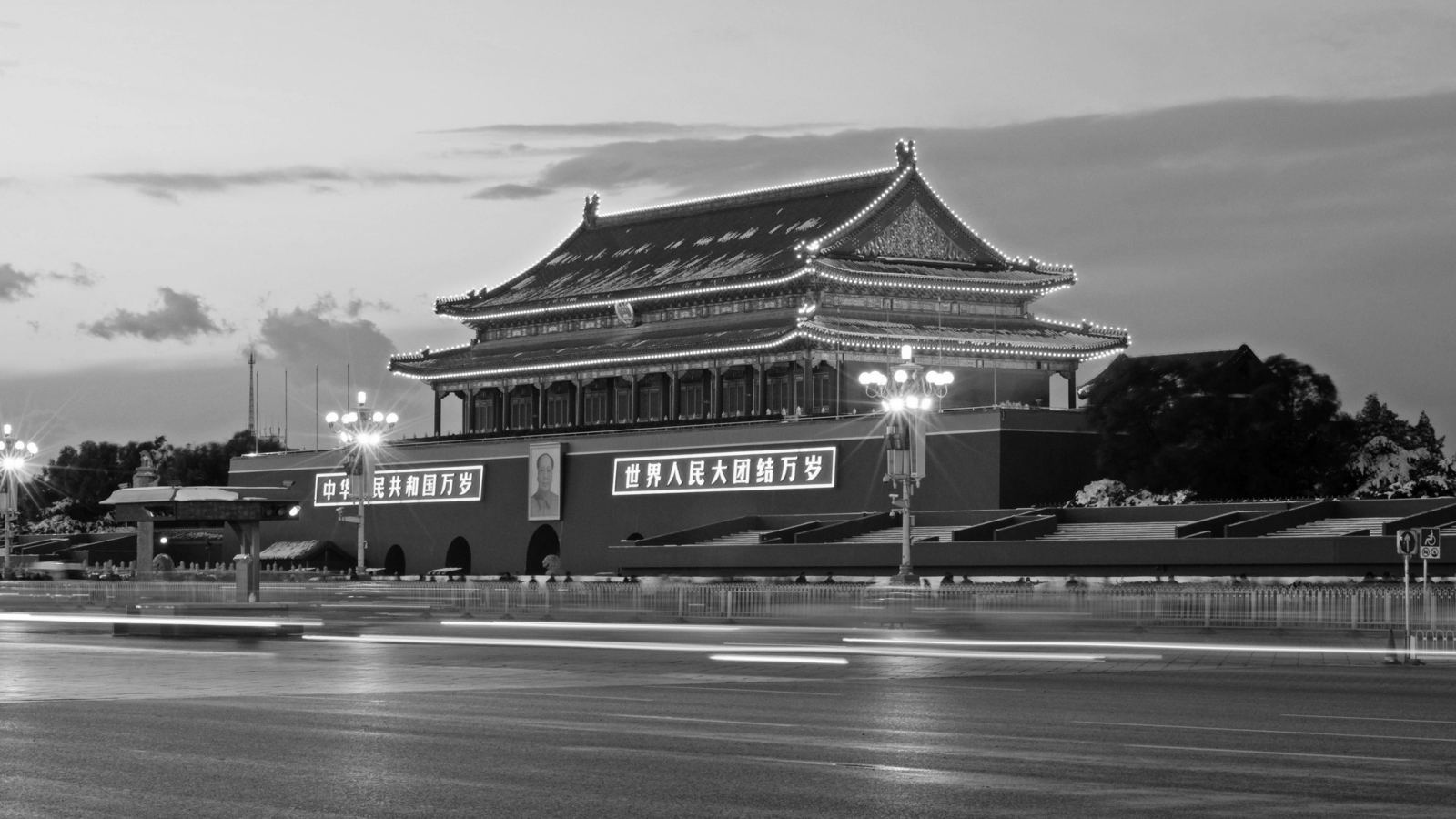
China staged its most significant military parade in years on Tiananmen Square to mark the 80th anniversary of the end of World War II’s East Asia theater. Officially titled the “Conference to Commemorate the 80th Anniversary of the Victory of the Chinese People’s War of Resistance Against Japanese Aggression and the World Anti-Fascist War,” the spectacle was both a commemoration of history and a statement of military strength from the PRC. President Xi Jinping inspected troops and, in his address, emphasized sovereignty, technological advancement, and the determination to resist foreign interference, framing China as standing firmly on what he called the right side of history.
The parade lasted about ninety minutes and revealed a vast collection of new military systems, many seen in public for the first time. The most significant was the unveiling of China’s full nuclear triad, comprising the DF-61 land-based intercontinental missile, the JL-3 submarine-launched ballistic missile, and the JL-1 air-launched system, demonstrating Beijing’s ability to deliver nuclear strikes from all theaters of combat. Hypersonic and cruise missiles were prominently featured, among them the YJ-17, YJ-19, and CJ-20A, many optimized for anti-ship roles. This reflects China’s priority of deterring U.S. and allied naval forces in the Indo-Pacific. Ground forces marched with advanced vehicles, including the new Type-100 medium tank, designed for mobility and modular integration of communication and weapons systems.
Moreover, unmanned technologies were central. The PLA displayed the AJX002 large underwater drone alongside stealthy and rotary aerial drones, showing a shift toward autonomy in warfare. Countermeasures were also important, such as the LY-1 laser weapon system and microwave air-defense tools, which are likely responses to the drone-heavy conflicts currently unfolding in Ukraine and the Middle East. Alongside hardware, the march featured newly formed units such as the Information Support Force, which was established in 2024 to centralize cyber and electronic warfare under one division. Their inclusion, therefore, indicated China’s intention to elevate information operations to the same level as traditional branches of the military. Finally, the event was also politically choreographed. It was the first major parade since 2019 and included foreign leaders such as Russian President Vladimir Putin and North Korea’s Kim Jong-un.
The international reaction was cautious, but revealing. U.S. officials characterized the parade as evidence of China’s “hardening” military stance, particularly with the public demonstration of a nuclear triad and long-range strike options. Japan’s government warned that the weapons on display, especially new anti-ship missiles, threaten to heighten tensions in already contested waters. Taiwan condemned the parade as historical revisionism used to legitimize military intimidation. Indeed, Business Insider analysis noted that the drones, laser systems, and cyber formations complicate defensive planning for the U.S., Japan, and Australia, while sharpening risks of escalation in a Taiwan conflict.
For Taiwan specifically, the parade highlighted the growing challenge of countering China’s expanding military capacity. The combination of hypersonic anti-ship missiles and long-range drones directly threatens Taiwan’s maritime approaches, making it harder for U.S. and Japanese forces to reinforce the island in a crisis. Meanwhile, the unveiling of advanced counter-drone and cyber units signals that Beijing is preparing to contest not only Taiwan’s skies and seas but also its digital networks and command structures. In practical terms, the parade reinforced the urgency for the island nation and its partners to strengthen electronic warfare capabilities and adapt their operational planning to anticipate faster, more complex Chinese assaults.
Yet while the parade underscored China’s modernization, it also raised questions about sustainability. Many of the systems remain untested in combat, and China’s ability to integrate cutting-edge weapons into a massive and sometimes cumbersome military bureaucracy is uncertain. Prevailing issues of logistics and command still remain. Economically, Beijing is also facing slower growth and demographic challenges that could constrain its defense budget. More importantly, the parade may trigger greater external balancing, accelerating U.S. cooperation with its allies in Southeast Asia.
Ultimately, the 2025 Victory Day Parade was more than a typical ceremonial event. By unveiling nuclear, hypersonic, unmanned, and cyber capabilities in one carefully planned event, China sent a message that it intends to compete across every military domain. It reminded Chinese adversaries and partners alike that Beijing is not just modernizing quietly, but instead shifting to asserting its power openly. At the same time, there are some inherent contradictions, namely a desire to project strength abroad while dealing with economic and institutional constraints at home. For China’s neighbors, the implication was clear. The military balance in Asia is shifting, and the challenge of managing Beijing’s assertiveness is requiring more attention with each passing year.