Growing Up Between Worlds
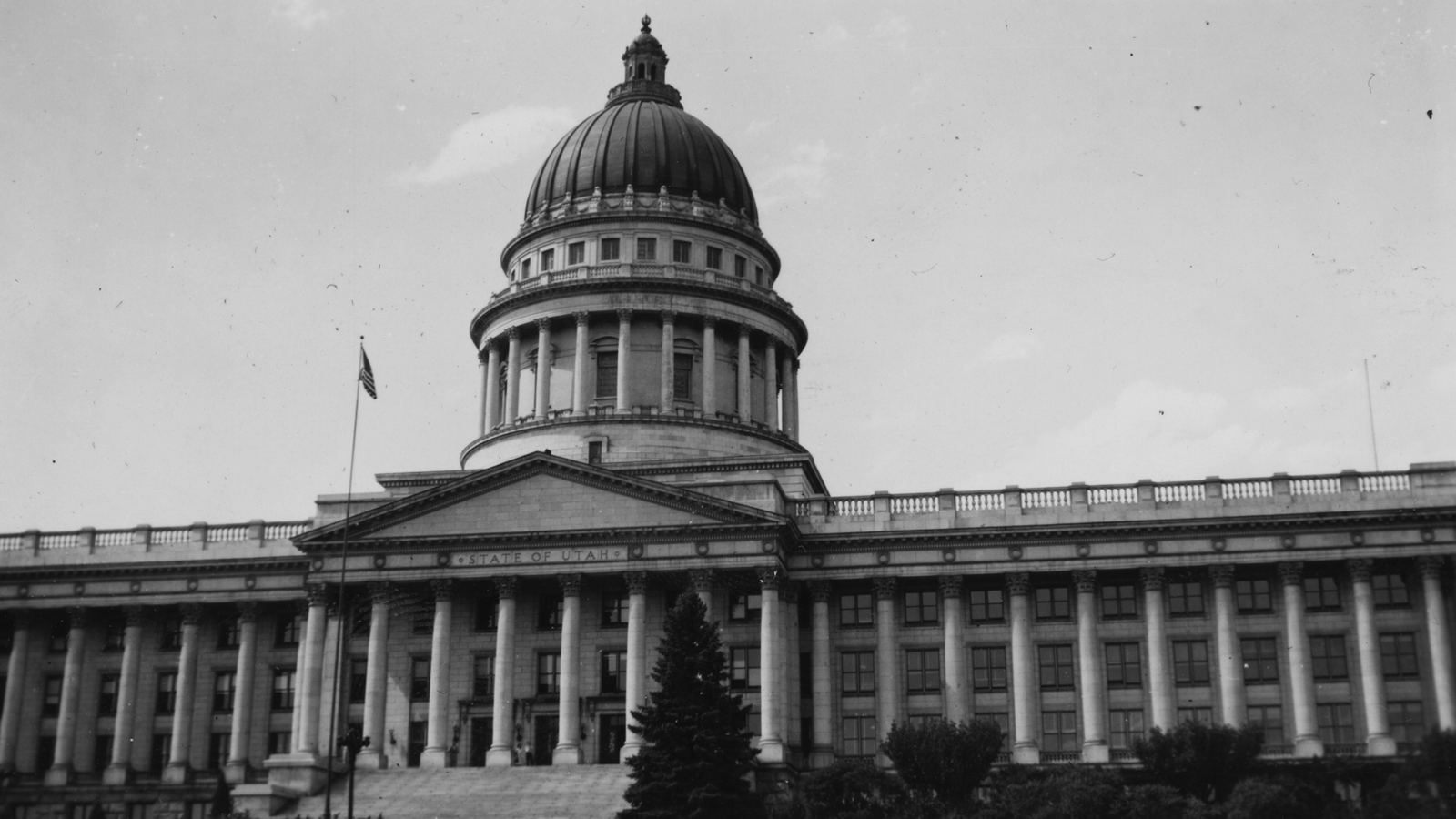
On September 10, news broke that felt like an earthquake in the ground I grew up on. Charlie Kirk—a conservative firebrand and founder of Turning Point USA—was shot dead at Utah Valley University during his American Comeback tour. Over 3,000 people were in attendance. But what unsettled me most wasn’t just the violence, or even who it targeted. It was where it happened: Utah, my hometown, a state often branded as safe, sheltered, and conservative to its core. If violence can erupt here, then nowhere is immune. And that, more than anything, reveals the crisis we’re living in.
As a Nigerian American woman raised in Salt Lake City, where conservatism is woven into the cultural fabric, I’ve always lived in a tension between belonging and alienation. My parents taught me to respect the values of faith and family we shared with our neighbors, but also to understand that the rhetoric often preached in Utah’s political spaces was not meant for people like us. This incident, tragically, brought all of those contradictions home.
The responses I heard only deepened that tension. Friends from high school messaged me in disbelief: “Utah, of all places?” My sister, who attends UVU, let us know what had happened. My father, after confirming the news, just said: “Too bad.” Shock. Detachment. Resignation. That’s where America is now. Some condemned Kirk as hateful. Others immediately made him a martyr. Both missed the deeper truth: we’ve normalized political violence. And the data shows it—57% of Americans now say political violence is a major problem, up from 44% just two years ago.
I don’t celebrate Kirk’s death. I understand why some people feel relief at the loss of a figure whose words were often dismissive and divisive. But I also recognize that he died surrounded by thousands of people found meaning in him. That duality, the fact that both truths can coexist, defines the polarized space we now inhabit.
When Violence Becomes Ordinary
Just two days later, another headline: bomb threats targeting HBCUs nationwide. My own university in Alabama wasn’t directly named, but Alabama State just down the road was. Those threats turned out to be hoaxes, but the timing was chilling. And this isn’t new: between January and February 2022 alone, 57 HBCUs were hit with bomb threats, nearly all of which targeted Black institutions. From a conservative rally in Utah to historically Black campuses in the South, violence and the fear of it echo everywhere.
In June in Minnesota, former Speaker of the House Melissa Hortman and her husband were assassinated in their home, while State Senator John Hoffman and his wife were shot at the very same night. Both attacks were carried out by a man armed with a “hit list” of nearly 70 names—lawmakers, abortion providers, and advocates he wanted dead. This wasn’t random. It was a planned political execution, one of the deadliest targeted attacks on state officials in recent history.
These ruptures are not about partisanship. They’re about what kind of nation we are becoming, or perhaps what we always were, now made undeniable. In high school, I competed in speech and debate, and one lesson has always stuck with me: the goal is not always to persuade, but to be heard. To tell a story in such a way that even if someone disagrees, they still understand your perspective. That’s what is missing now in our national dialogue. Instead of listening, we rush to blame. Instead of grappling with complexity, we flatten it into absolutes.
I’m young. My peers and I are entering adulthood at a time when political violence feels routine. And it’s not just perception: from 2016 to 2024, the U.S. recorded 21 terrorist plots or attacks on politicians motivated by partisanship—compared to just two in the entire quarter-century before. It’s tempting to go numb. But numbness is a luxury we can’t afford. Whatever path we take after college, we have to resist animosity, hear others out, and reject hate even when it’s easier to embrace it.
Choosing to See Humanity
Humanization is being chipped away every day. We see it whenever disagreement turns into dismissal, whenever someone is reduced to an enemy because they think differently. In moments like this, it is not enough to scroll past the headlines or retreat into silence. We have to pay attention, be mindful of how fragile this moment is, and recognize that history is being made around us.
The world doesn’t stop spinning, even when violence shakes us. But what we choose to do in these moments, how we respond, how we show up, matters. We are inheriting a country shaped by contradiction, division, and pain. But we also inherit the power to shape what comes next.
We can choose not to give in to indifference. We can choose to listen, to speak with care, and to act with courage. In a time when dignity feels fragile, our responsibility is clear: protect it, honor it, and never forget that history isn’t just something we watch. It’s something we write.