The Drone Attack and Immediate Aftermath
In early September 2025, a wave of Russian drones entered Polish airspace through its Eastern border with Belarus and Ukraine, in a bold incident that has been described as the first kinetic test of NATO’s resolve since Russia’s invasion of Ukraine itself. Over September 9-10, at least 19 unmanned aircraft, which were later identified as Shahed-type Gerbera drones, moved over Poland amid a larger Russian bombardment of Western Ukraine.
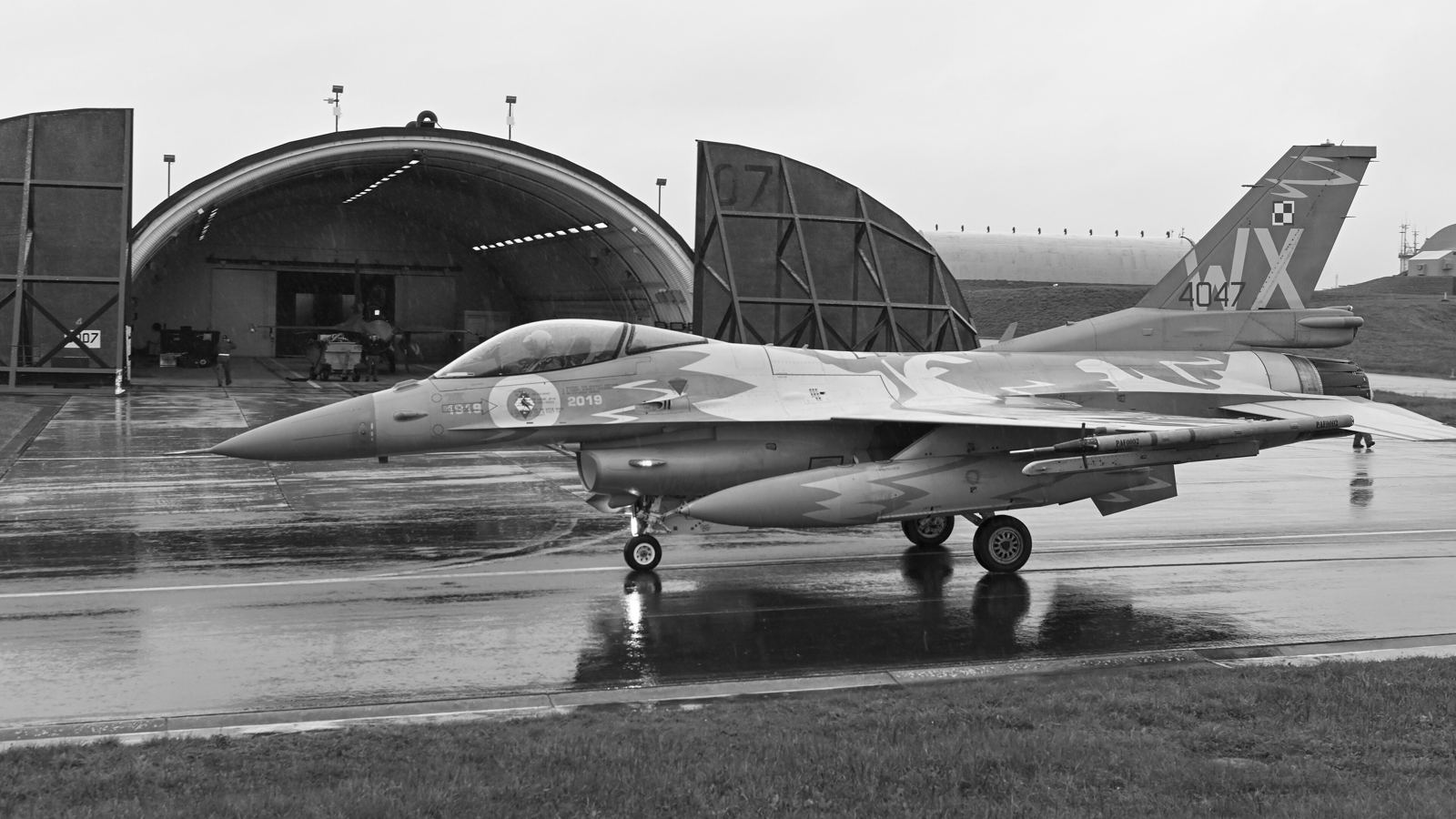
Polish forces quickly scrambled F-16 fighter jets, joined by allied Dutch F-35s and an Italian early-warning aircraft, to intercept the drones. These forces shot down several drones, the only ones deemed to be potential threats, while the others were allowed to crash harmlessly in unpopulated areas. Yet this clear breach of Polish airspace triggered alarm across NATO. Warsaw quickly portrayed the incursion as a deliberate measure to test NATO’s defenses - a “reckless and unacceptable” attempt to test the alliance’s readiness, as NATO Secretary-General Mark Rutte characterized it.
Despite the lack of casualties, Poland treated the violation as a grave security threat. Warsaw invoked NATO’s Article 4, which allows any member nation to request consultations with the other allies when it believes its territorial integrity, political independence, or security is threatened. More broadly, many Western leaders, including Ukraine’s President Zelenskyy, widely saw the drone incident as a clear violation of NATO territory and a wake-up call to defend the alliance’s Eastern Flank.
NATO’s Response: Operation “Eastern Sentry”
Within two days of the incursion, NATO unveiled a major new defensive initiative codenamed “Eastern Sentry.” Announced by Secretary-General Rutte on September 12, Eastern Sentry is a collective operation designed to strengthen air and missile defenses across NATO’s Eastern Flank, from the Baltic States in the north to Romania and Bulgaria in the South. In his announcement, Rutte stressed that “we can’t have Russian drones entering allied airspace.” The operation went live that evening, with a range of military assets deploying to improve NATO’s existing forward presence in Eastern Europe.
Eastern Sentry brings new allied firepower and technology to the region. For instance, Denmark quickly committed two F-16 fighter jets and an anti-aircraft frigate to reinforce regional air and naval defenses. France announced it would send three Rafale jets, while Germany forward-deployed four Eurofighter Typhoons. Britain and other NATO members also pledged support, with more allies expected to join the effort. More importantly, the operation integrates aircraft with ground-based missile defenses, radar networks, and electronic warfare units to create a flexible defensive unit across the Eastern Flank, while also expediting the installment new counter-drone sensors and jamming systems to blunt Russia’s asymmetric tactics.
These reinforcements integrated with existing NATO battlegroups and air patrols operating from multiple bases across the Eastern Flank. General Alexus Grynkewich, NATO’s Supreme Allied Commander Europe, described Eastern Sentry as a flexible, multi-domain mission able to rapidly concentrate defensive resources where needed. The goal, Grynkewich said, is to shield all member nations by deterring further Russian incursions and reassuring allies that NATO can respond within hours.
NATO officials note that Eastern Sentry builds on lessons from earlier measures. The concept is modeled on the “Baltic Sentry” operation introduced in early 2025 to secure the Baltic Sea region. Like that mission, Eastern Sentry pairs traditional military forces with new counter-drone technologies to better detect and neutralize unmanned threats. Overall, the launch of Eastern Sentry highlights NATO’s resolve to adapt and strengthen its deterrence capabilities when needed. Rutte said the operation will “add flexibility and strength to our posture” and make clear that the alliance is “always ready to defend” every member.
Moscow’s Motives and Denials
The drone incursion did not appear to be a completely random error, according to the latest military intelligence. Analysis from the Jamestown Foundation notes that the timing coincides with Russia’s Zapad-2025 military exercises in Belarus and western Russia, suggesting a coordinated show of force. By sending unmanned aircraft over NATO territory during a mass strike in Ukraine, Moscow may have been gauging the alliance’s reaction while maintaining plausible deniability. The drones that entered Poland were Gerbera models, which are low-cost decoys with no explosives. Therefore, their incursion into Polish airspace may have been a low-risk way to confuse NATO’s radars and observe how quickly the alliance would react.
Moscow’s official line has been to downplay the event and deny any intentional violation. Russia’s defense ministry claimed its drones were targeting Ukraine and “had not intended to hit any targets in Poland,” while Russia’s U.N. ambassador argued the drones lacked the range to reach Polish territory. Other pro-Russia commentators even suggested that the drones may have been steered off course due to Ukrainian electronic warfare, thereby placing the blame on Ukraine’s defenses and denying the possibility of a deliberate Russian provocation.
Few in the West find these explanations credible. NATO leaders and independent experts widely interpret the incursion as a calculated provocation, not a mistake. The Institute for the Study of War assessed that Russian drone forays are “likely attempting to gauge NATO’s capabilities and reactions” to determine Russian strategy in future conflicts with the alliance. Ukraine’s President Volodymyr Zelenskyy also dismissed the idea of genuine error, insisting that Russia’s military knows where its drones are being sent, and calling the incident “an obvious expansion of the war” by Moscow. He elaborated that it aligns with Russia’s broader strategy of testing the waters with smaller actions, which could lead to bigger dangers if left unchecked.
Allied Reactions and Warnings
The United States and other NATO allies moved quickly to reassure Poland and the rest of the alliance of their solidarity. At the UN Security Council, the U.S. joined a Western statement condemning Russia’s violation of Polish airspace as “alarming.” Moreover, the U.S. vowed to “defend every inch of NATO territory,” a message aimed at reassuring NATO allies after U.S. President Donald Trump suggested that the drone incursion could have been a Russian mistake.
Meanwhile, Polish officials bluntly rejected the “accident” theory and urged the U.S. to take tangible steps to “show solidarity” with Warsaw. Indeed, aligning with Poland’s claim, days after Eastern Sentry was announced, Romania reported that a Russian drone had briefly crossed into its airspace during an attack on Ukraine, which is similar to the incident over Poland. Romanian officials noted this was already the 11th such violation of NATO airspace since 2022. The Baltic States have also reported periodic incursions by Russian drones or stray missiles since the war began. Overall, NATO commanders have urged that these attacks are part of a broader pattern, rather than isolated incidents. “The violation of Poland’s airspace earlier this week is not an isolated incident and impacts more than just Poland,” Gen. Grynkewich observed, explaining why NATO acted proactively with Eastern Sentry.
Meanwhile, Russia has responded by issuing warnings amid NATO’s military buildup, with Russian officials insisting that any NATO intervention against their craft would cross a red line. Dmitry Medvedev, the Deputy Chair of Russia’s Security Council and longtime Putin ally, criticized “provocative” ideas floated within NATO of shooting down Russian munitions before reaching NATO territory. He added that such a plan would mean war between NATO and Russia. So far, NATO has kept responses confined to allied airspace, noting the risk of escalation, although the recent Russian incursions may prompt a more aggressive change in strategy.
Reinforcing the NATO-Russia Border
This drone crisis comes amid a broader effort by NATO’s eastern members to fortify their frontier with Russia and its allies. Poland and Lithuania, in particular, have led efforts to militarize the border, specifically by withdrawing from the Ottawa Convention to begin the use of landmines. Meanwhile, in direct response to the recent drone incident, Warsaw launched its own large exercise, code-named Iron Defender, mobilizing some 30,000 troops, and deployed an additional 5,000 soldiers to reinforce the Belarusian frontier. Neighboring Lithuania likewise strengthened security on its borders with both Belarus and the Russian exclave of Kaliningrad. Now, with Operation Eastern Sentry adding even more allied units and capabilities on the ground, NATO’s Eastern Flank is being transformed into an increasingly fortified zone.
While the Kremlin condemns these measures as provocative, they are, in reality, reactive measures to Russia’s own militarization and frequent testing of NATO’s red lines. Each Russian provocation, from aerial incursions to Zapad drills simulating attacks on the West, has been met with a corresponding escalation from NATO. Ultimately, this cycle of action and reaction has steadily ratcheted up the military presence on both sides. The drone incursion over Poland and the quick reaction of Eastern Sentry may represent a tipping point in this dynamic, informed by the policy that even small incursions can carry enormous strategic significance. For the alliance’s Eastern Flank, staying one step ahead of a Russian threat may be the surest way to prevent the next crisis.