Since President Donald Trump first took office, he has been quick to identify and tackle a variety of targets. Illegal immigration across the United States-Mexico border. Diversity, equity, and inclusion policies in schools and workplaces. Unfavorable trade imbalances between the U.S. and foreign countries.
While these were largely expected of him, though, Trump has also pursued a new, surprising target with a particular vengeance: science.
Just hours after his inauguration on January 20, 2025, Trump made his intention to target scientific advancement loud and clear by initiating the process to withdraw from the World Health Organization, one of the world’s leading bodies when it comes to coordinating responses to international health crises, setting standards surrounding pertinent health issues, and compiling and evaluating data to develop more comprehensive understandings of global health matters.
The Trump Administration has cited WHO’s “mishandling of the COVID-19 pandemic” as justification for the withdrawal, joining just three other countries globally that are not a part of the organization. Not only will the United States’ withdrawal from WHO cut an estimated 12-15% of the organization's funding, but it also makes a statement about what the U.S. values—or, in this case, doesn’t value. If there is one thing that the Trump Administration has made clear, it’s its willingness to compromise scientific advancement and collaboration to make a political statement—which has only fed into international and national polarization in the process.
This pattern has also occurred on the national level. Trump has proposed an $18 billion cut to funding for the National Institute of Health, which conducts both internal research and provides grants to outside sources for critical health studies, medical innovation, and community outreach.
While these cuts are startling enough, it is the way that Trump has wielded them that reflects the truly twisted nature of his intentions. In particular, Trump has weaponized funding from the NIH and other federal grants to force American universities to comply with his policies surrounding DEI and other practices that clash with the president’s agenda. Top research institutions like Cornell University, Northwestern University, Harvard University, and Johns Hopkins University have lost hundreds of millions of dollars in federal grants, halting many critical research studies.
The U.S. Department of Health and Human Services, headed by Robert F. Kennedy, Jr., has played a critical role in pioneering this new attitude towards health and medical advancement. Kennedy, who has long been controversial for his views on vaccines, has promoted the “Make America Healthy Again,” or “MAHA,” movement. Kennedy’s efforts thus far have centered around pushing to phase out certain synthetic chemicals and dyes in food products; however, Kennedy has also sparked controversy for his interest in studying potential links between vaccines and autism, a theory that the scientific community has largely disputed.
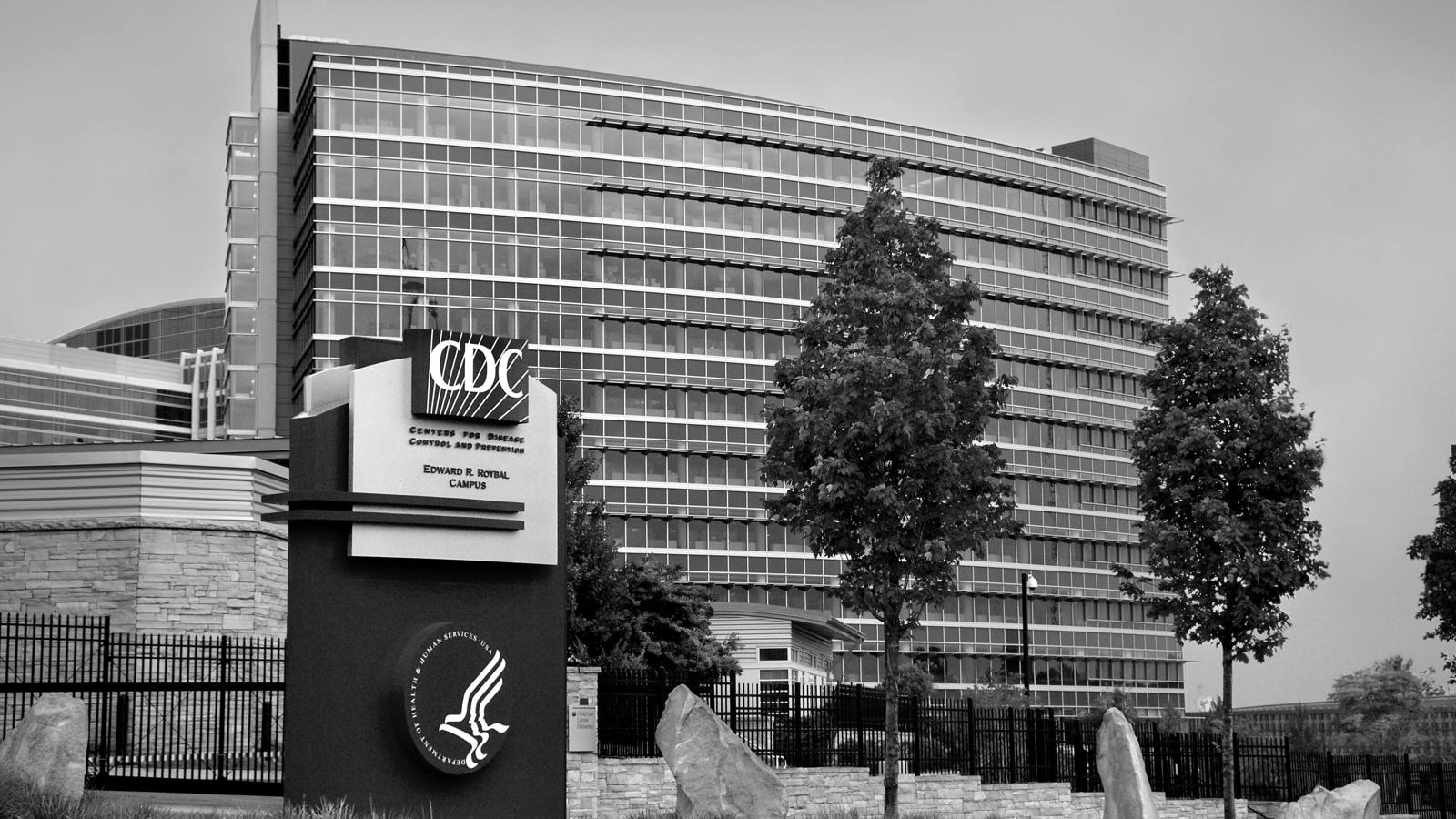
On June 9, 2025, Kennedy seemed to take this skepticism a step further by firing the entire 17-member staff of the Advisory Committee on Immunization Practices, a scientific committee that advises the Centers for Disease Control and Prevention (CDC) on vaccination standards and practices.
The former board members, all of whom were appointed by former President Joe Biden, were set to have their terms expire in 2028; however, as Kennedy explained in a Wall Street Journal article, firing the former board was the only move to “re-establish public confidence in vaccine science.”
However, Kennedy’s decision to oust the former committee members seems to do just the opposite. Several of the eight members that Kennedy has appointed in place of the former board harbor anti-vaccine views, particularly surrounding the development of mRNA vaccines, which have displayed significant potential for medical advancement and progress. Furthermore, by surrounding himself with committee members who will reaffirm his views, Kennedy may have more autonomy to drive his own decisions—such as when he altered certain COVID-19 recommendations without consulting the committee first.
While exploring new ideas and considering different perspectives is one thing, shaping a key scientific committee to center around a single politicized narrative defeats the purpose of science in the first place—to harness an objective understanding of the natural world in order to drive human innovation and progress.
As the Department of Health and Human Services and the federal government as a whole distance themselves from the CDC and the broader scientific community to fuel the political agenda of a certain group, the U.S. is putting itself in a dangerous position that places partisan advancement over scientific progress. This doesn’t just mean that the U.S. could lose its global standing as a leader in health innovation and advancement; it means that the very purpose of science could be reshaped to reflect political gains rather than a genuine desire to improve vital medical treatments and devastating health issues.
Science is not a weapon to be wielded or an accessory to a larger partisan agenda; it is a vital part of the U.S.’s international identity, a symbol of hope to those afflicted by illness and other health matters, and, amidst political division and global uncertainty, a constant reminder of the unifying promise of progress.