When Vladimir Putin first declared his “special Military Operation” and Russian forces marched on Ukraine in force for the first time since the annexation of Crimea in 2014, few expected the outnumbered and outgunned Armed Forces of Ukraine to hold out against the 2nd most powerful military in the world.
However, as initial Russian cohesion broke down across the front, and Ukrainian counterattacks met with success against hastily assembled Russian fortifications, the world's expectations shifted drastically in Ukraine’s favor. Despite this, the hopes of completely retaking the country’s lost territories were dashed beneath the hum of weaponized drones and miles of trenches. Drones have helped Ukraine retake large swaths of territory. Now, they are assisting the Russians in pressuring a now worn-out Ukrainian force that is understaffed and undersupplied.
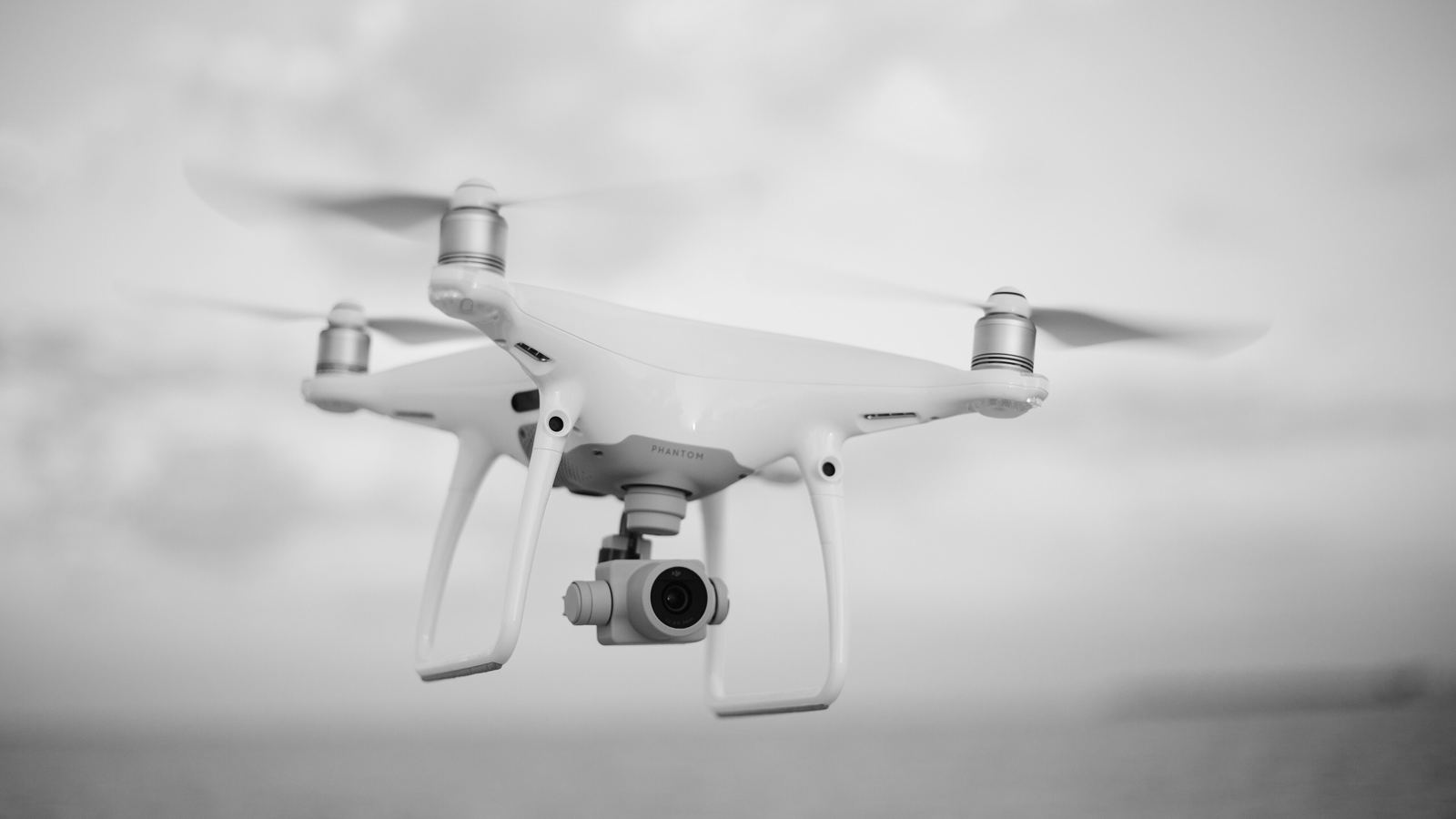
When fighting first erupted in 2014, both sides introduced drones, albeit in limited reconnaissance roles. A ceasefire agreement in 2014 severely limited the use of manned aircraft over Donbas and thus the role of traditional airpower. In this scenario, drones became a prized alternative in the static warfare that ensued. At the time, the most commonly deployed drone variant was the Chinese DJI Mavic, whose hefty $2000 price tag constrained its use at scale.
In the full-blown invasion that came after, the drone of choice became the FPV (First Person View) drone, a simple quadcopter paired with remote control stations and goggles. The primary feature of this drone lies in its price: the total cost of the drone’s machinery, including an attached explosive, can be as little as $500 or less.
It also offered a more versatile range of customization than previous DJI variants and is easily assembled with scrap components. These factors accounted for, Ukrainian soldiers began heavily utilizing these drones in a multitude of ways, ranging from surveillance to loitering munitions and bomb strikes. To the Ukrainian military, drones offered a relatively cheap response to Russia’s far more capable air force, allowing them to keep tabs on enemy movements, strike vulnerable targets, and guide precision munitions from artillery. This effectively transforms a cheap, off-the-market drone into a precision-guided missile (something that costs orders of magnitude more), with the drone’s agility allowing it to exploit vulnerable gaps in armored vehicles and tanks to effectively neutralize their targets.
Recently, June 2nd saw one of the most effective applications of drones so far in the conflict. Ukraine launched a massive drone attack that struck deep into Russian territory, hitting multiple Russian airbases. The operation, which was lauded by President Zelenskyy as “absolutely brilliant,” had fundamentally shifted the playing field between the two belligerents and will undoubtedly reshape the conflict going forward.
Codenamed “Operation Spiderweb,” the attack was reportedly in preparation for around 18 months, consistent with its sophistication and complexity. 117 drones concealed in the roofs of wooden sheds had been smuggled into Russia using trucks, which were then positioned near the targeted airbases. At the signal, the roofs of the sheds were remotely opened, before operators flew the drones to their designated targets. Furthermore, all Ukrainian operatives were successfully extracted from Russian territory prior to the attack, although Russia has disputed this claim.
The Ukrainian security service, or SBU, has also claimed that the attacks caused $7 billion in damages and knocked out 34% of Russia’s strategic bomber air fleet. Specifically, the losses sustained were Tu-95 “Bears,” and Tu-22M “Backfires,” both long-range bombers capable of carrying nuclear armaments, and described by the SBU as “aircraft that bomb Ukrainian cities every night.” The attack is especially devastating because the production of both aircraft ceased during Soviet times, leaving Russia with no way to replenish its fleet with more of such aircraft.
It is, however, important to note that the figures provided by Ukraine have been disputed. Russia, while acknowledging that the attacks hit their targets, maintains that none of the bombers have been completely destroyed beyond an irreparable state.
A fairer assessment comes from the United States, which has stated that 20 bombers were hit in total, and only 10 were rendered unrepairable. Regardless, the scope of the attack is still impressive, as Ukraine managed to hit bases thousands of kilometers deep into Russian territory. In total, four airbases were targeted: Olenya airbase, Murmansk Oblast; Dyagilevo airbase, Ryazan Oblast; Ivanovo airbase, Ivanovo Oblast; and Belaya airbase, Irkutsk Oblast. Thus, the attack reached the northernmost regions of Russia with Olenya airbase, located in the Arctic Circle, as well as the easternmost regions with Belaya airbase, located in southern Siberia.
The attack prompted a strong response from the Russian government. The Kremlin branded the operation as a “terrorist attack,” while Deputy Chairman of the Security Council of Russia Dmitry Medvedev vowed that “retribution is inevitable.” Additionally, President Putin said that he will “have to respond” in a June 4th call to President Trump. Meanwhile, the response from the Russian public has been one of clear worry and dissatisfaction. One Russian resident, identified as “Svetlana,” asked in an interview with Radio Free Europe, “How? How is this possible? How did they let those trucks through? There are so many questions.” Meanwhile, another one identified as “Marina” complained that, “The war is in its fourth year, what will happen in its fifth year? You don’t know how to fight, make peace, don’t disgrace yourself.” The response brings to mind the 2024 Crocus City Hall terrorist attack, which killed 137 Russian civilians in Moscow, and led many to question the effectiveness of Russian intelligence and security. Overall, the Kremlin will likely have to reckon with increased scrutiny of both the war as a whole and its internal security apparatus in the coming months.
In response, Moscow launched one of the largest aerial attacks against Ukraine of the entire war, launching almost 500 drones and 20 missiles, of which Ukraine claims 277 drones and 19 missiles were intercepted. One person was reportedly injured. Another attack, just a day later, involved 315 drones and seven missiles, which reportedly hit civilian areas in Kyiv and Odesa, including a maternity ward. The second attack was deadlier, killing three and wounding 13. In response, President Zelenskyy wrote that, “Russian missiles and Shahed strikes are louder than the efforts of the United States and others around the world to force Russia into peace”. Overall, both the initial Ukrainian attack and Russia’s reprisal demonstrate the sheer effectiveness and complexity of drone-based operations, signaling their rising importance in the conflict.
However, as drone tactics evolve to become more sophisticated, so have their countermeasures. Counter-drone warfare primarily involves two methods: kinetic and electronic means. First and foremost, a drone can always be neutralized via kinetic strikes like bullets or missiles. Militaries can also conduct anti-drone operations using drones of their own, flying them into one another, or modifying certain models to capture enemy drones with nets.
Secondly, drones can be taken down through disruptions to the radio signal that connects the operator to the drone. This mostly involves signal jammers to stop pilots from seeing and controlling their drones. To counteract electronic jamming, both sides have employed signal booster drones as a means to bridge communication deficiencies, along with fiber optic drones, unmanned aerial vehicles that use a fiber optic cable for communication and control, to bypass electronic dead zones.
Since Russia’s introduction of large-scale fiber-optic drones, traditional electronic warfare countermeasures mounted on mechanized armor have been rendered useless, as these drones rely on physical rather than digital communication links. Consequently, fiber optic drones can fly into dense and complex terrain without losing signal, with higher camera resolutions that do not expose their operators' location. Russia’s superiority in this domain was put on full display through its recent push to evict Ukrainian forces from Kursk – a region taken by Ukraine in August of last year. So far, there are no clear solutions in the drone war. While fiber optic drones are invisible to electronic jamming, they are slower, more expensive, and have a shorter range due to their physical cables compared to their traditional counterparts.
So far, Russia’s numerical superiority has allowed it to strike targets by overwhelming Ukrainian air defense with simultaneous attacks from multiple directions. But as Ukraine rapidly adapts, employing mobile air defense units and evolving tactics, it’s clear that while the fighting may be confined to Ukraine for now, the lessons and technologies emerging from this war will shape future warfare far beyond its borders.