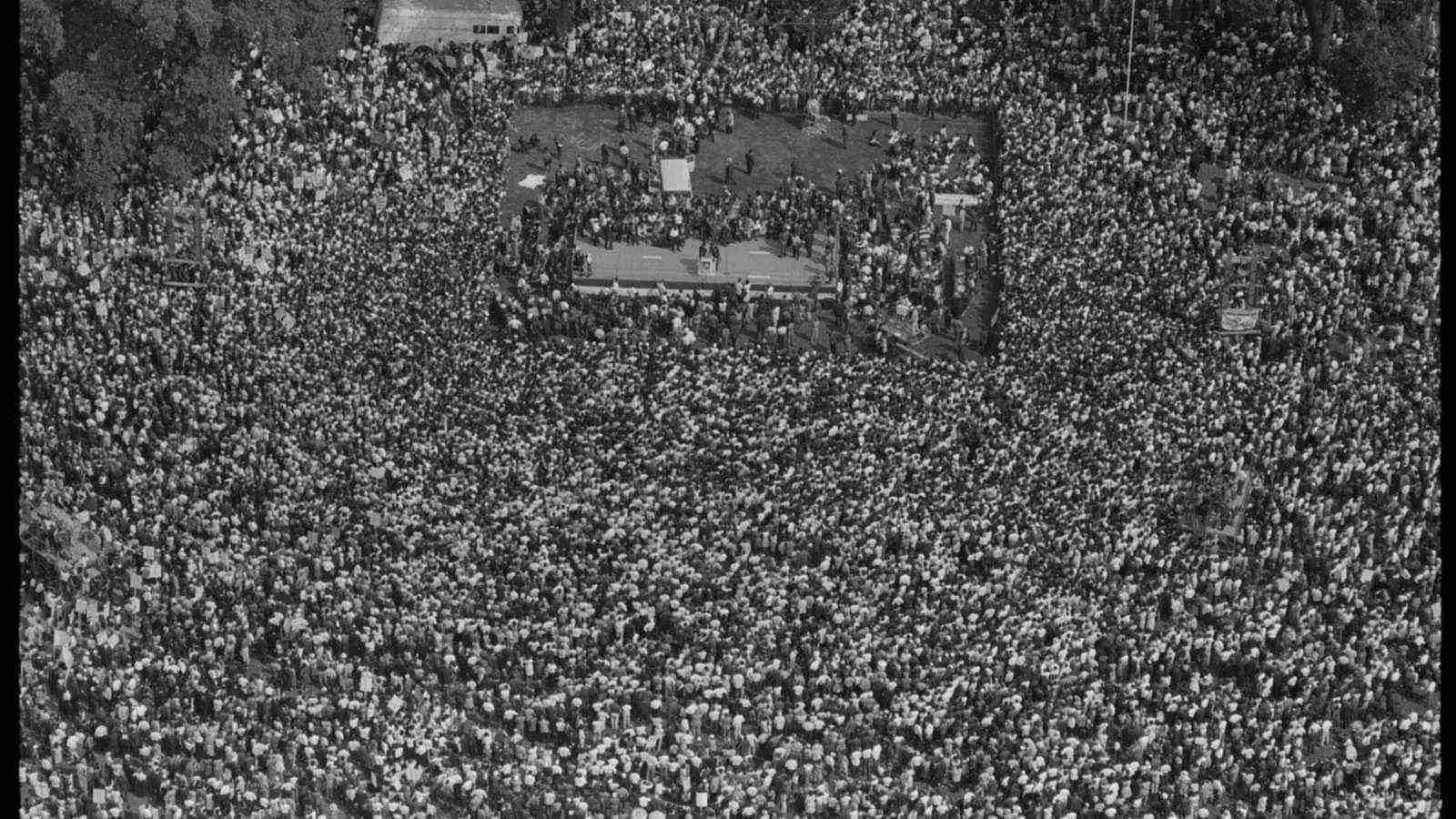
On Saturday, June 14, Americans in over 2,100 cities and towns across the United States came together with their communities and protested the growing contentious use of executive power. Although the slogan “No Kings’’ has become quite ubiquitous in the past week, the millions of Americans who marched the streets with messages on signs weren’t reviving a trend—they were voicing a political critique built on the pillars of fear, anger, and passion.
Why “No Kings” Hits a Nerve
Tapping into historical memory, the phrase “No Kings” serves as a reminder that America was founded in rebellion against monarchical power. To the millions of protesters who took to he streets on Saturday, the event was a stand against the undelivered promise of representation made by President Trump and the federal government. At the same time in D.C., the military parade celebrating the Army’s 250th birthday was set to take place.
The demonstrations across the nation shed a bright light on the popular desire for a re-centering of values in a system that many believe is becoming authoritarian. Teachers, students, workers, and other civilians linked arms to emphasize their disapproval of the federal government in the form of a peaceful protest.
Meanwhile, the very soldiers marching in the D.C. parade protested in the form of walking out of line, breaking protocol with President Trump watching. Their defiance, though brief, carried outsized symbolic weight—uniformed individuals rejecting the presence of state power directly in front of its highest power.
Taken together, the coordinated civilian protests and overt acts of dissent from within the military sent a clear message: distrust and discomfort was embedded across all sectors and demographics of American life. “No Kings” protestors reclaimed history with the fear of history repeating itself, demanding that a nation founded in resistance to authoritarianism truly live up to the value of being led by the people.
How the Administration is Responding
The administration’s initial response to the protests was to frame them as “politically motivated disruption,” diverting any concerns of real systemic issues. Press briefings have been heavily scripted, with Press Secretary Karoline Leavitt following directives to a T. Police presence has substantially increased in states where these protests occurred, including in Utah where a fatal shooting occurred during one of the “No Kings” rallies.
It is clear that the Trump administration is focused on more “pressing” issues such as the conflict in Iran—however, this dismissive attitude has turned off many of the administration’s very own supporters, including immigrants whose lives have been negatively impacted by ICE. Rather than open channels for dialogue, the administration has leaned into symbolism: American flags, military imagery, and calls for “restoring normalcy.”
Well, who gets to define normalcy? The people feel as if that power is slipping away from them. The choices of the administration made under the overarching agendas have been a confirmation for many that President Trump is dangerously close to becoming a dictator figure, claiming exemption from constitutional precedent.
The White House has yet to make any direct response to the “No Kings” protests through press briefings or public messaging channels, and this has been largely interpreted as a purposeful avoidance, designed to deny the demonstration legitimacy.
In dodging the issue, the administration is becoming increasingly self-reliant in maintaining its agenda as public support takes a nosedive. In attempting to appear stable and composed, officials across the aisle have highlighted their own disregard for the concerns of Americans. And the result is a confirmation to the people of America that authority, that of the very people whom the people have elected, is no longer accountable, and resistance may be the only remaining resort for expression.