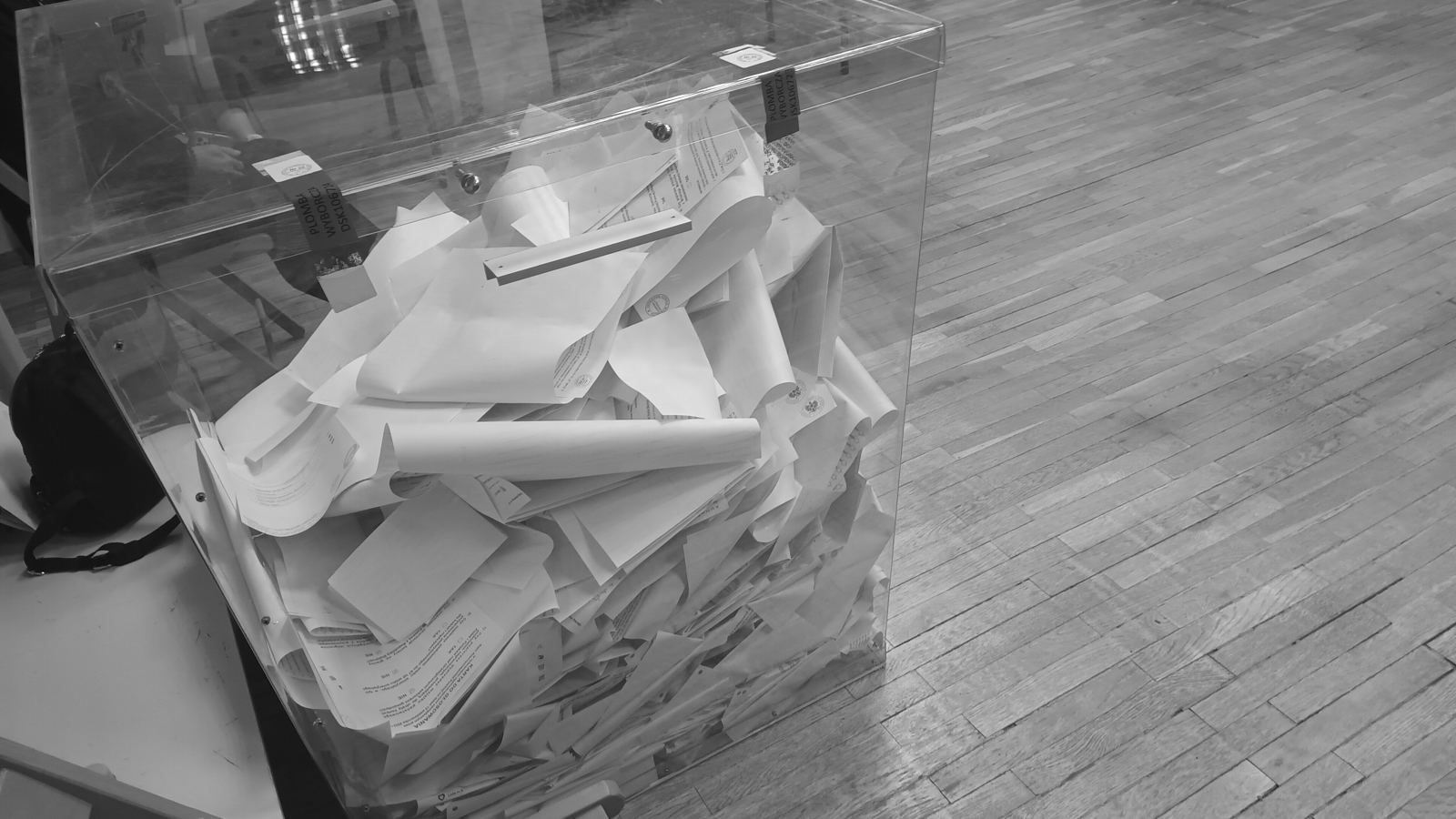
Why would you choose to vote for someone? Perhaps your candidate of choice has a great economic policy? Comprehensive plans of welfare? Ideas to expand latent proto-industries? The answer, no matter what it may be, stems from one fundamental assumption. What we know is the truth, and what we decide from that point, is the reflection of that known truth. The power is in our hands, the informed citizenry.
This belief in transparency eroded long ago when "necessary poisons" such as lobbying, donations and advertisements were introduced. This belief will only be crumpled further as we witness the rise of a new medium of sabotage–deepfakes. Picture Donald Trump's leaked audio recordings of a call he had with Putin hitting the headlines. Pictures of Trudeau's miffed expression after an awkward handshake. There is video and audio evidence, so it is a well-documented scene. Surely, it's true!
It may be quite harrowing to know that hundreds of such videos and audio clips proliferate the internet, waiting for a docile believer. Many have been doctored to assume an uncanny likeness of known political leaders, portraying them in a negative light.
A Slew Of Misinformation is Rightly Confusing
In Australia, we see ABC News Verify take A$100 and produce a convincing piece of misinformation about a Senator with ease. Early this year, we saw Rishi Sunak in the papers for allegedly promoting a scam platform. Even the dead are resurrected, with India's Tamil Nadu elections having mutliple voices of the past harshly critiquing incumbents. Their voices were rallying the people for a change, with sharp rhetoric and accusatory tones. How can our governments protect against such convincing footage in the era of virality and the politics of outrage?
Deepfake content preys upon a gap in the laws of intellectual property as there are few jurisdictions that protect one's image or voice. More so if the individual is meant to be in public discourse, such as a politician. To close this gap, we return to the coveted idea-expression dichotomy forming the foundation of the TRIPS agreement. Learned judges must proclaim what can or cannot be protected.
Current legal mechanisms are meant to protect original works of (human) authorship that are fixed in a tangible medium of expression. This means they do not cover Deepfakes, given that they are intangible, abstract expressions made by a non-human.
Legal avenues for justice would be defamation, fraud, trademark infringement or matters of personal dignity. However, protections against Deepfakes falter here as defamation does not protect against false assertions (only allegations), and non-commercial deepfakes cannot be discussed under trademark infringement. Laws about likeness relate to commercial pictures and representation as opposed to one's personal image, and thus many can be left without recourse in the theatre of politics.
That being said, the law of Copyright may offer a solution, even if there is a clear human author requirement. This may be a point of deliberation for the future, as there have been numerous inquiries made as per the following:
- What is considered a high degree of human involvement to adjust and customize a computer programme? Is it then a Copyright work?
- What if an AI system could produce a highly unique image, one of a higher "quality" than that of a human work?
- What if an AI system produced an original work as the system designer used "non-disclosed pre-existing" content to train, and test the model?
- What would push AI-generated content to become copyrightable if all the above questions are unanswered? Could it simply be that arts and politics absorbed AI as the new norm and included it at all levels?
The last question may be the hardest to answer. Deepfakes may not be authored or a work yet, but they are the deliberate output of those who wish to sway the masses with the appropriation of one's likeness. There is a chance that these two statements could one day be synonymous in the courts. Hence, if any doctrine were to offer a solution, it would be that of Copyright and how one's voice image and reputation could be protected against unauthorized use.
It could be argued that such a solution, if viable, would still not be enough. On a large scale, AI disinformation through Deepfakes could mean going further than slander and discrediting. They could cause the dysfunction of democratic processes if the mechanism's integrity is doubted.
Democracy demands fair representation of the pressing issues and the seemingly innocent and evergreen candidates
With AI, many can rewrite history or edit, clip and lighten dark narratives.
Some are keen to wash their erring off their records, such as Prabowo and his 19 billion-views campaign on TikTok to turn him from the former faltering Special Forces commander to a warm Presidential leader.
Similarly, the Slovakian government was shocked to have its democracy's credibleness dashed when a top candidate was seemingly ousted for boasting about rigging the election.
It is crystal clear that the world is not ready for a direct assault on the character of political leaders through AI, much less one on the purposefully opaque workings of a democratic election.
In countries such as South Korea, Argentina, and Pakistan, political parties have deployed custom AI chatbots and even AI-generated video campaigns (such as for the imprisoned Imran Khan) to make information more accessible to voters. Such initiatives are framed as efforts to open up the political process by providing direct access to party messages and candidate platforms. Parties use AI-driven channels, and argue that they are fostering transparency, and not merely framing narratives. Is access to such material truly arming the citizen to be informed? This raises questions about the lines between information and influence, and how campaigns ought to be propagated.
Smear campaigns and urgent appeals for votes are increasingly amplified by AI in nations with unregulated AI use, targeting both young voters eager for digital engagement and older generations who may be swayed by persistent, personalised messaging.
When Trump lost in 2020, many were quick to claim that it was rigged against him, a sentiment echoed by Deepfakes. It is shocking that in one of the most diverse, educated and active democracies, there was so much pushback on the results of well-documented election. Perhaps more shocking was the released proof that Russia utilised Deepfake technology in what RAND called "sweeping and systematic fashion" to discredit Biden's win and cause inflammatory tensions between the Left and Right.
Though it was proven to happen, deniers persist till today. Many do not argue on the grounds of factual recall, but use this misinformation as grounds to harass, attack and prevent nonpartisan workers from doing their jobs. These include those who count the ballot, guide the voters and ensure fairness. It should not be acceptable to allow such roles to be questioned, all due to videos and quotes of unknown origination.
That's Strike 2 on democracy by AI. First attack the people, then the processes that elect them. What could Strike 3 be? Perhaps the deliberate manipulation of issues that concern the masses. It could be reasonable to suspect that AI can be used to produce content on social media platforms to incite rage, sadness and division to sow discord as opposed to letting people unite. This could mean that the political theatre had unwanted plots, with many real issues being overshadowed.
Could Strike 3 be affecting voter turnout? The Campaign Legal Center suggests that bad actors could misinform susceptible citizens about critical dates and places about the election, or even convince them their votes would be for naught. We already saw this in 2023, when the voters in New Hampshire's primary received calls from Robo-President Biden to "save" their vote for the November 2024 election.
Resolutions are coming
The Take It Down Act was a monumental win to stop Deepfake porn. Many were outraged to hear that women were being degraded online and justice was swift. Perhaps this protection could extend to reach our elections, to prevent and clamp down on fabricators. Disinformation already seeds itself in a society where there is lacking equal participation in voting. Voters of colour, minor religions and low socioeconomic status continue to face barriers to entry due to targeted attempts to control or sway their vote.
If authorities fail to act decisively, they risk allowing irreparable harm to their democracies, and in a world where information is wielded asymmetrically, the promise of equal liberties may become a missed relic of the past.