All it took was 45 seconds. 45 seconds for the 100th Anniversary of the National Speech and Debate Association's (NSDA) National Tournament to be tainted with the fear of thousands of competitors, judges, coaches, and students.
On June 19, an unidentified attendee entered the stage during the Humorous Interpretation (HI) Finals and reached into their bag in front of hundreds of spectators. The perceived threat of violence forced chaos and desperation to dictate the tragedy that would result in at least 3 injured requiring hospitalizations, according to Perrin investigations (for clarification, there are many more unofficial injuries claims via social media with claims of concussions, bruises sustained from being trampled on and broken ankles from running away).
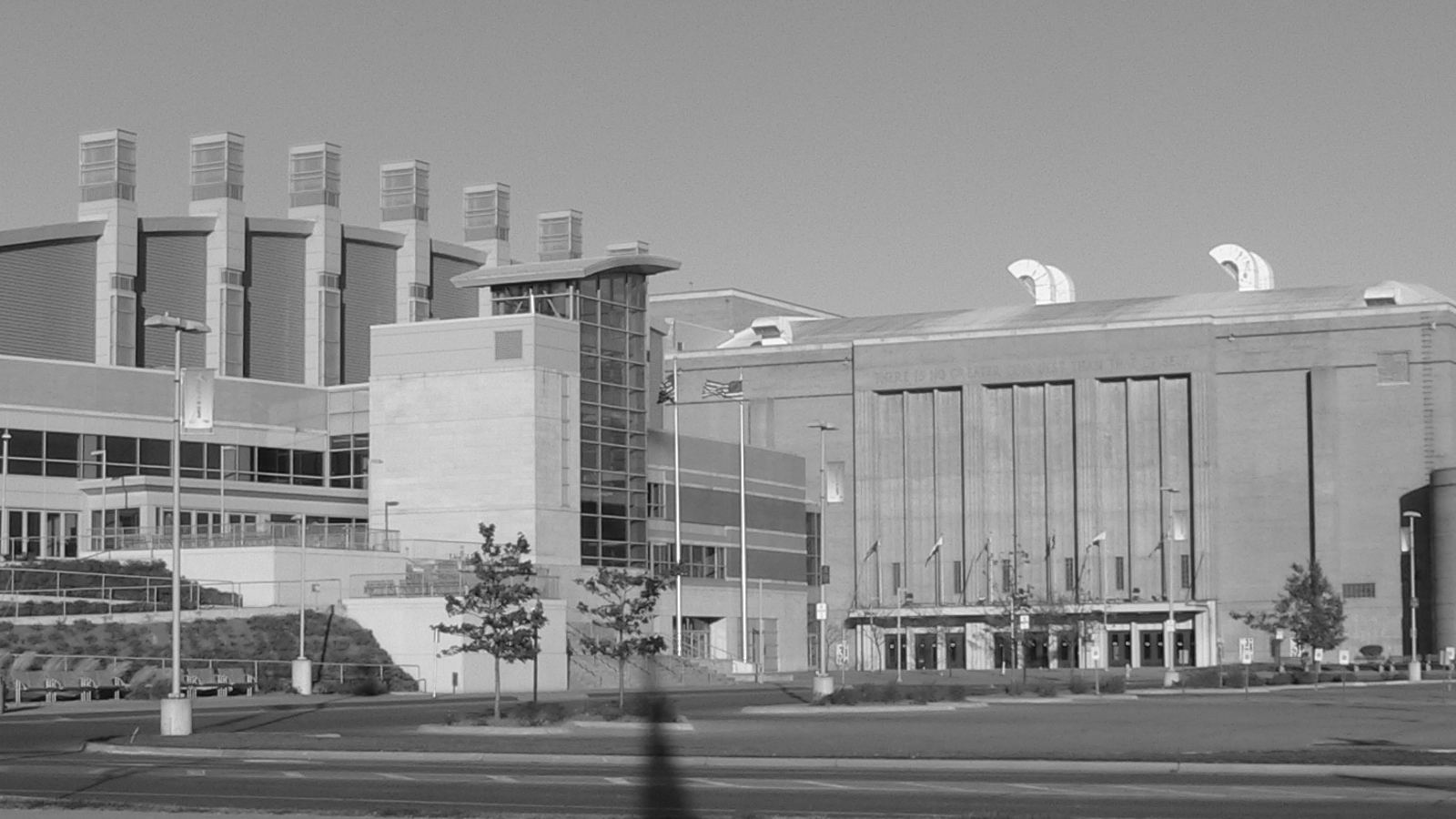
At 4:23 PM, twenty-two-year-old Jayden Michael Roccaforte of Cheyenne, Wyoming, was arrested yesterday after being escorted from the EMC Expo Center, host of the centennial NSDA tournament, in Des Moines, Iowa, on two charges of possession of a controlled substance and one charge of disorderly conduct.
Their motives for storming the stage and yelling words similar to “want to hear a knock-knock joke” are unknown, but it has been observed that Roccaforte was the NSDA 2021 National Champion for Poetry Reading and NSDA 2020 National Champion for Prose, representing Cheyenne East High School, Wyoming.
From multiple personal accounts and the NSDA livestream video of the event, Roccaforte is first “heard” entering from stage right, as the camera pans away from the last contestant of HI, and focuses on the young person who curses out an expletive and then after yelling to the crowd of spectators, makes a motion to grab something out of their backpack. That motion is what triggered the swarm of people to run away from the stage and their seats, as many feared he was reaching for a weapon or some form of device.
Autumn Weimer, a duo interpretation qualifier from Penn High School, Indiana, was watching the round live in the back right bleachers, and initially thought the person on the stage was a contestant. The unusual entrance and odd introduction were perhaps just a play on words; a presentation that didn’t follow conventional rules. But once the initial skepticism passed, she knew something was wrong.
“My first reaction to the person was confusion,” Weimer said. “I heard him say: ‘knock, knock, guess what’s funny, a bomb.’”
Wyatt Mullins-Bell, a qualifier in Original Oratory from Southern Lehigh High School, Pennsylvania, had a similar reaction to the unforeseen event with a teammate. His first impression was that the NSDA certification of identity was plain to see (the orange ribbon), so it had to be someone who didn't know their way around.
“When I first saw the individual, I was confused,” Mullins-Bell said. “My first thought was that they had been trying to find an exit but went in the way wrong direction. And I did not recognize them in any way, but I noticed they were wearing an orange visitor’s ribbon, so I assumed everything was fine, just the case of someone getting lost.”
But in a matter of seconds, as someone over the speaker system yelled, “run away”, students and spectators were left to run without any sense of direction or known point of safety from the intruder. This fear, unfortunately, is not unprecedented but comes from a long history of gun violence in the United States, where as of today, there have been 23 school shootings in the US in 2025.
Nehemiah Mitchell, a competitor at the supplemental events for RISE High School, Colorado, agreed with the similarities between the fast reactions of everyone in the situation due to the ongoing threat of gun violence in America.
“Honestly, yes [about why people were so quick to act and run away because of gun violence],” Mitchell said. “And it’s heartbreaking … I personally, in the moment, was frozen up because I didn’t know what to think when the man was on the stage and had a backpack, so I stood there still, while the crowd went into full-blown chaos because they were scared for their lives.”
Perrin contacted NSDA to comment on the event, but NSDA did not respond.
From the three statements published on Thursday (VIA social media and the official NSDA website), each varying in response to the initial event, the consensus has been that the competition is moving forward with safety and security at the forefront.
"The individual was subdued and removed from the premises by the actions of onsite law enforcement," Executive Director J. Scott Wunn said in a statement on 6/19 at 9:03 pm. “There were no weapons involved. However, the incident scared students and other attendees present. The safety and well-being of our whole community, especially our students, is our top priority… After speaking with the NSDA community, including finalists and coaches, we have decided to suspend the competition for today. We will continue Friday with a revised schedule.”
However, the statements have had mixed reactions. Before Thursday evening’s message, it was 2 hours after the evacuation of the center that the tournament announced it would initially be moving forward with finals. And it wasn’t until the pushback in the comments section on Instagram and the Dramatic Interpretation finalists protesting not to perform Thursday night, that the most recent decision was made.
Kennedy Garvin, a qualifier in World Schools Debate, from Glacier High School, Montana, feels that the response could have been better catered to a community that has brought up this issue of gun violence in America multiple times on the national stage.
“I believe that the NSDA’s response was both inconsiderate and tone deaf,” Garvin said. “They attempted to tone down the incident and essentially mollify the traumatic nature of today’s events for their constituents. Continuing events after students thought they were going to die, is blatantly disrespectful and I was extremely disappointed in the NSDA for how unprofessionally this was handled. Additionally, I think the amount of terror all of us felt in that moment is being completely understated in both the media and by NSDA simply because he ‘didn’t actually have a weapon’, yet we all holistically believed he did for a solid 45 minutes before an email was sent out.”
Given the current verbiage of “no reported injuries,” the message getting through to students is not well received, leaving many with frustration at an organization that is supposed to ensure the safety of over 7,000 students for the duration of a week.
Noor Sarwar of Blue Valley High School, competing in Original Oratory, was in the room as it happened and witnessed Roccaforte being tackled by an audience member, in the rush of panic after the perceived threats were made by Roccaforte.
“I had gotten many bruises on my legs and stomach because I had fallen,” Sarwar said. “I know people who had concussions, gashes, broken bones [and] sprained limbs because of what happened. My friend had her face stepped on and you could see the shoe prints on her face. My teacher and I attempted to take another friend to a clinic nearby, but it was full.”
Sarwar was not alone in witnessing injuries at the tournament; multiple other students have come forward with wounds in the aftermath.
“I injured my knee during the stampede when a girl in front of me fell, I fell on top of her, and then someone fell on me,” Weimer said. “I landed full force on my left knee and have a [bruise]. I thought it was horrific how [NSDA] thinks we can just go about our day and act like nothing happened. There may not have been a gun or bomb, but there were people injured. Not only were people physically injured, but this will cause trauma to hundreds, if not thousands, of people who were at the event. How can you expect to have people perform on the very stage that you didn’t have secured the first time?”
Mullins-Bell held a similar perspective, especially given the perception of the lack of accountability for the treatment of injuries that were both physical and mental.
“My initial reaction was surprise,” Mullins-Bell said. “I mean, I knew immediately that their statements were either false or misleading regarding a threat and regarding injuries. People felt threatened for their lives, and the whole building was evacuated… Later, when [NSDA] announced that they were resuming finals, I felt like my trauma meant nothing. I was still fighting off a panic attack, despite having escaped to a hotel about 10 miles away. It was infuriating to me as it was to, I’m sure, many others.”