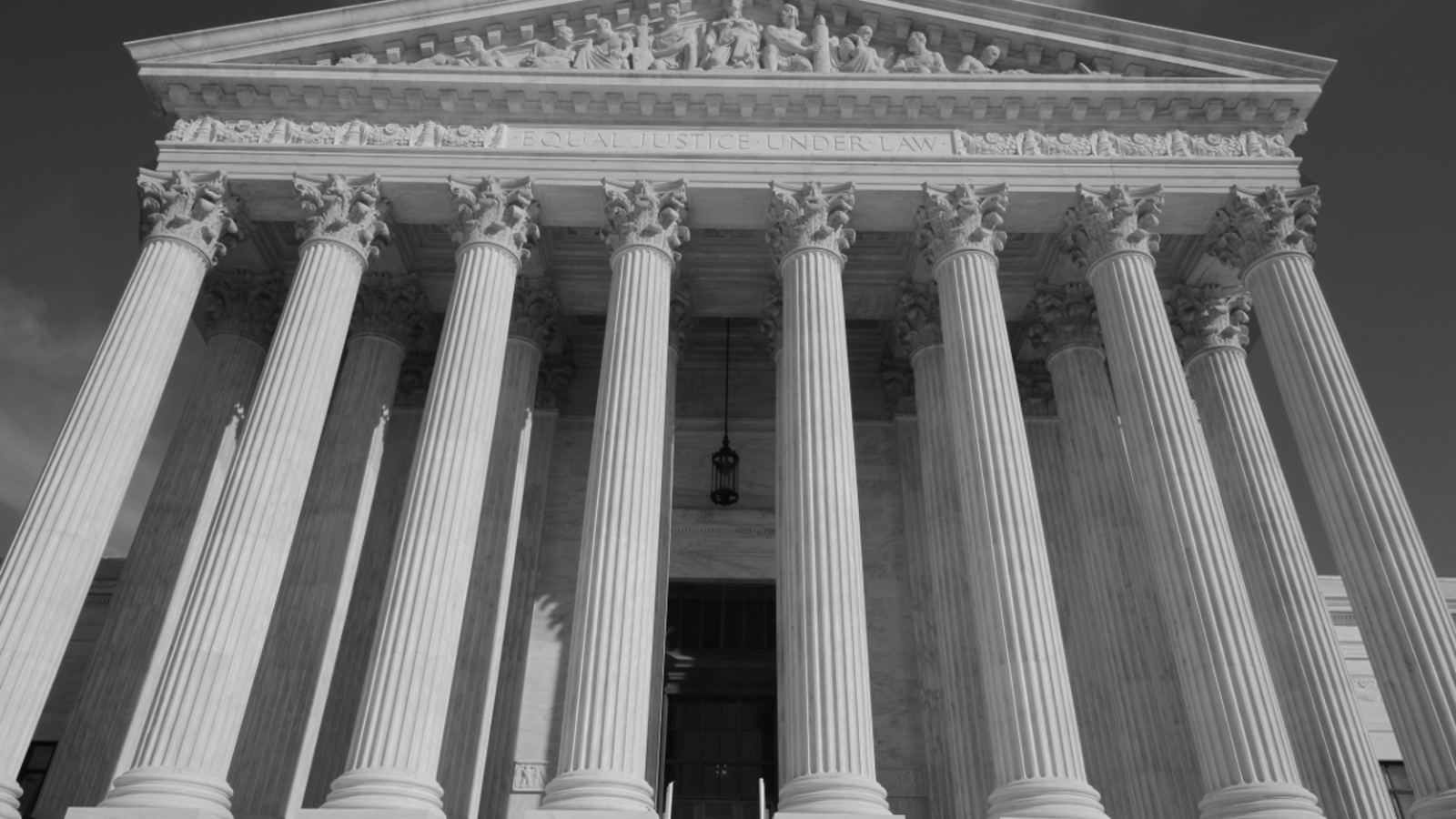
On June 30, the United States Supreme Court agreed to hear a challenge brought by a team of two Republican committees and Vice President J.D. Vance. The justices will hear whether the appeal would violate the U.S. Constitution's First Amendment which limits the amount of money spent by political parties in coordination with candidates, involving J.D. Vance, who was then running as a Republican candidate for the Senate in Ohio.
The plaintiffs–the Republican party–argue that the limitations imposed by the local courts “severely restrict” what the First Amendment legally allows them to do, and began the lawsuit in 2022.
The court will hear arguments in favor and against the case and issue a judgment in its next session, beginning in October.
The provision involved is the Federal Election Campaign Act of 1971 and its amendments, which limit the amount of money individuals or groups can contribute to a candidate. This is to prevent corruption and improve transparency around political parties. The amount that can be contributed varies from state and is based on the population. According to Reuters, in 2014, this was limited to $123,000 to $3.7 million for senators and $62,000 to $123,000 for House of Representatives candidates.
The previous ruling was established in the 2001 case, where it upheld this decision of enforcing limitations on candidate support, which the Cincinnati-based U.S. 6th Circuit Court of Appeals also held in this case.
Another landmark case is the 2010 Citizens United v. FEC decision, in which essentially, it was held that unlimited money could be spent on these electoral campaigns by outside groups.
However, since the appeal has been announced, U.S. President Donald Trump has filed a court brief, providing the appeal with presidential support. The Federal Election Commission has also sided with the Republicans, noting that it violates the Constitution’s First Amendment.
The justices, on the same day, allowed for three Democratic parties to support the Cincinnati-based U.S. 6th Circuit Court of Appeals.
Democratic Congressional Campaign Committee, which is a body that works to elect Democrats for the House of Representatives, chair Suzan DelBene, DSCC (Democratic Senatorial Campaign Committee) chair Kirsten Gillibrand and DNC (Democratic National Committee) chair Ken Martin stated in a statement that they refuse to sit while the Republican parties continue to overthrow long-standing election laws.
The impact of this could potentially open the floodgates for contributions for the 2026 midterm elections, as noted by ABC News. The floodgates argument, as supported by Global Witness, will only exert more influence over U.S. politics, leading to erosion of campaign finance, transparency, and an increase in corruption. This would also strongly contradict the efforts of Congress to limit these financial restrictions since the 1970s.
However, with the decision taken in the Citizens United case, the intention of Congress in the 1970s or even of the Cincinnati-based U.S. 6th Circuit Court of Appeals to avoid corruption by enforcing limitations on such spending has proven little success.
Rick Hasen, an expert at the UCLA School of Law, shared with NBC News that recent cases have undermined this reasoning of preventing corruption. He believes that limiting political parties' contributions but no caps for outside groups like super PACs may only worsen the situation, by increasing the spread of negative advertisements and promoting undesirable groups.