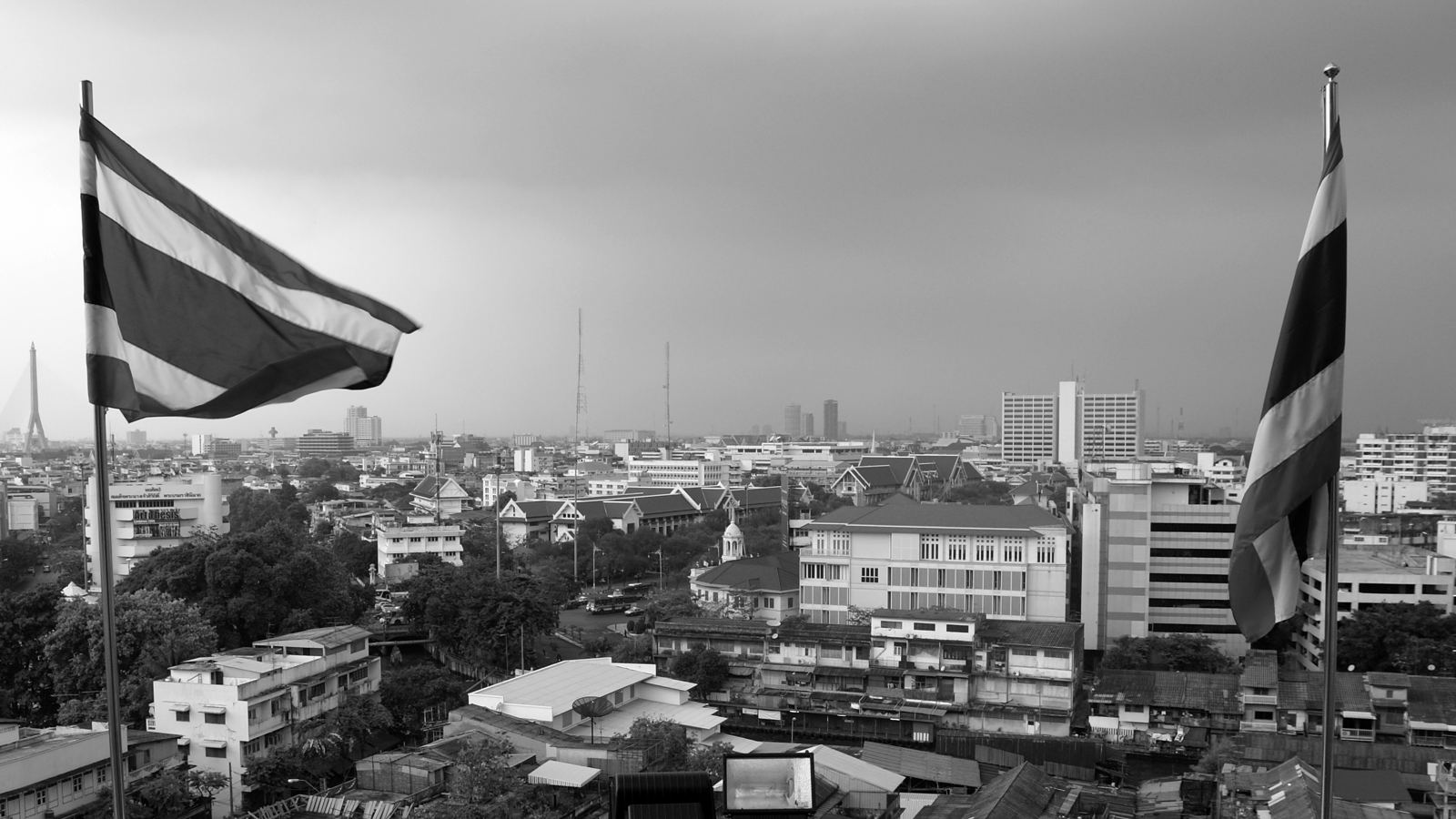
Thousands rallied at Victory Monument on June 28th calling for Prime Minister Paetongtarn Shinawarra to quit, the largest anti-government demonstration since her Pheu Thai party took power in 2023. The immediate trigger was a leaked June 15 phone call with former Cambodian leader Hun Sen and a border skirmish that inflamed nationalist sentiment. Paetongtarn’s coalition lost its biggest partner, the Bhumjaithai Party, leaving the government with only a slim majority. In parallel, a petition by 36 senators has prompted Thailand’s Constitutional Court to suspend the prime minister pending a ruling on an ethics complaint. These events are the product of a deep, decades-long division between the Shinawatra dynasty and the country’s military-aligned establishment.
The crisis began with an armed confrontation on May 28th along the disputed Thai-Cambodian border. A Thai army unit and Cambodian forces clashed near the Preah Vihear temple area, resulting in the death of at least one Cambodian soldier. In response, Prime Minister Paetongtarn Shinawatra sought to defuse tensions by phoning former Cambodian premier Hun Sen, now Senate President. In the leaked June 15 conversation, she urged Hun Sen “not to listen to the other side” in Thailand, referring to a Thai army general she said “just wants to look cool,” and apologized for the incident.
However, the recording infuriated Thai nationalists. In Thailand, public criticism of the army or deference to a foreign leader to Shinawatra’s extent is seen as taboo. Protest leaders accused Paetongtarn of undermining Thai sovereignty and favoring a foreign strongman, saying many felt “the prime minister and her influential father, Thaksin Shinawatra, were being manipulated by Hun Sen.” Paetongtarn later defended herself in press remarks, insisting her “true intention…was to work for the country to maintain our sovereignty and save the lives of all our soldiers,” but the damage to her standing was done.
By June 28, grievances had coalesced into a major protest in Bangkok. Thousands of demonstrators, many wearing yellow royalist uniforms, occupied Victory Monument at the center of the city. The rally was organized by the ultra-royalist United Force of the Land coalition, a veteran network of nationalist activists that has mobilized against Shinawatra governments for decades. Organizers set up a large stage and speakers called upon the crowd to defend the monarchy and military honor. Protestors also waved flags and chanted slogans like “Ung Ing get out,” referring to Paetongtarn by nickname. One leader, Parnthep Pourpongpan, even declared that “she [Paetongtarn] should step aside because she is the problem.”
There was a notable overlap between protests and the “Yellow Shirt” movement loyal to the monarchy. They booed Paetongtarn’s name and called for her immediate resignation, blaming her and her family for a string of perceived insults to Thailand. As one Al Jazeera reporter noted, the crowd insisted Paetongtarn’s conversation with Hun Sen “undermined the military” and were “insisting that she step down.” In effect, this was the largest anti-government demonstration in Bangkok since Pheu Thai took power two years ago. Protestors warned they would escalate street actions if their demands were not met.
The scandal immediately rattled Thailand’s fragile coalition government. Bhumjaithai, the centrist party that had provided Paetongtarn’s ruling alliance with its crucial majority, quit the coalition over the crisis. The departure cut the government to 255 seats in the 500-member House, barely above the 251 needed for a majority. The loss of Bhumjaithai was especially damaging because the party had threatened a no-confidence motion against the premier even before the border flare-up. With Paetongtarn suspended from office, the immediate no-confidence bid has been put on hold. Even so, political observers note that while Bhumjaithai cannot move against a suspended leader, it and other opposition groups could yet force an election if the coalition falls apart later.
With the coalition’s margin razor-thin, every vote became vital. Parliamentary sessions reconvened in early July under intense scrutiny. Analysts warned that without a clear way forward, Thailand’s government could slip into paralysis. As one correspondent summarized, “in the current chaos, who would replace her is as much a concern as whether she can survive.”
Amid the public outcry, legal actions moved swiftly. On July 1, Thailand’s Constitutional Court accepted a petition from 36 appointed senators accusing Paetongtarn of dishonesty and breaching ethical standards with the leaked call. On the very same day, the court suspended Paetongtarn from her duties pending a decision on the case. Until the court rules, Deputy Prime Minister Suriya Juangroongruangkit, a veteran politician who also serves as a transport minister, has stepped in as her caretaker PM.
In a curious twist, the government simultaneously conducted a cabinet reshuffle. Shortly after her suspension, Paetongtarn was appointed as minister of culture, a move designer to let her attend Cabinet meetings despite her interim suspension. In effect, she can still influence policy quietly behind the scenes even as the courts review her fate.
The court case is not the only challenge she faces. Thailand’s National Anti-Corruption Commission (NACC) also announced it would investigate the same leaked call. If the NACC finds wrongdoing, it could refer her to Thailand’s Supreme Court for a separate ban on her holding public office. In parallel, former Premier Thaksin Shinawatra, Paetongtarn’s father and political mentor, attended a criminal court hearing on July 1 over alleged comments he made in 2015 that violated Thailand’s lese‑majesté law.
The law is a strict statute preventing negative comments regarding Thailand’s monarchy - Thaksin could face up to 15 years in prison if convicted. The former premier, who returned from exile in 2023 and was briefly hospitalized, is also facing scrutiny over the terms of his medical parole. The Supreme Court is holding hearings this month to decide whether his out-of-prison hospital detention was justified.
Together, these legal battles demonstrate how the Shinawatra dynasty is under siege on multiple fronts, echoing past years when courts and coup leaders ousted Shinawatra governments in 2006, 2008, and 2014. Thus, Thailand now heads into an uncertain political period. With the governing coalition holding only a slim majority, even a caretaker government under Suriya would have to fight to pass legislation.
Opinion polls also suggest Paetongtarn’s popularity has crumbled; one poll released in late June put her approval ratings at just 9.2%, down from over 30% months earlier. While observers agree that Paetongtarn’s position is “very difficult,” the big question is what comes next and who would be a viable replacement.
Only time will tell whether Thailand’s instability leads to a quick compromise, new elections, or even a complete upset of the political status quo.