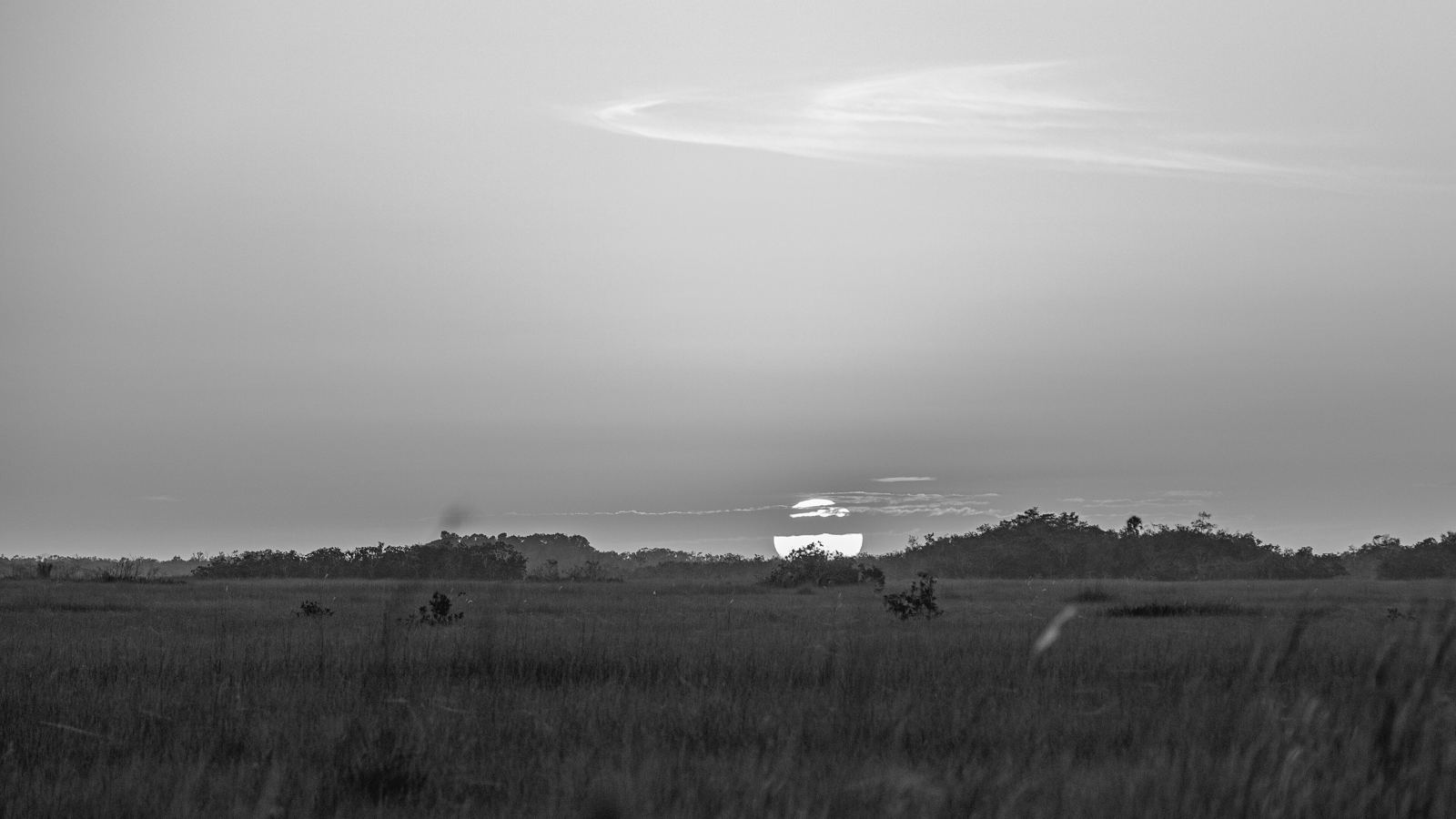
The infamous Alcatraz Federal Penitentiary, fabled for its housing of notorious criminals such as Al Capone and Robert Morris, sits a mile off the coast of San Francisco, surrounded by the rough waters of the San Francisco Bay. In a spin on the inescapable Alcatraz, the Trump Administration, in tandem with the Department of Homeland Security (DHS) and Florida Governor Ron DeSantis, recently opened its immigration detention center inside Big Cypress National Preserve in Ochopee, Florida, enclosed by alligator and python-infested waters.
The detention facility, nicknamed ‘Alligator Alcatraz’, received its first group of detainees on July 3rd, formally kicking off operations. As a detention center for immigrants facing deportation, population numbers are expected to increase to 5,000 people within the coming weeks. The facility was built in just eight days and is surrounded by 28,000+ feet of barbed wire secured by more than 200 security cameras. Moreover, the average temperature in the area is 91 degrees Fahrenheit, and rainfall amounts have already begun to flood the compound.
After visiting the facilities on July 1st, two days before opening, President Trump hailed the DHS for making a “brilliant choice,” suggesting that other states follow suit. For many Republicans and supporters of the center, his remarks reinforce their sentiment that violent immigrants necessitate a contemporary version of the prison used to house the most violent gangsters in the early twentieth century. Later in his statement, however, the President also noted that ‘Alligator Alcatraz’ was a “little controversial.” Opponents of the center find it extremely concerning, for that matter, as a callous, political stunt with far-reaching effects on the environment and human rights, which has even led some to draw parallels with Auschwitz.
Largely, the concerns of opposition to the center have outweighed its support, with many advocating for a discontinuation of operations. Ultimately, under all circumstances lies a deeper query over the constitutionality of ‘Alligator Alcatraz’.
The Eighth Amendment and Precedent
The Eighth Amendment of the United States Constitution states that “Excessive bail shall not be required [...] nor cruel and unusual punishments inflicted.” Vaguely worded, the Eighth Amendment has been brought up numerous times in American history mainly to prevent torture and disproportionate punishment in relation to a crime. Today, ‘Alligator Alcatraz’ may warrant its consideration.
Supreme Court precedent has adjusted the Eighth Amendment to require prison officials to ensure humane conditions, including the preservation of one’s right to adequate food, clothing, and safety. In Estelle v. Gamble (1976), the Court ruled that deliberate disregard to a prisoner’s medical needs violates the Eighth Amendment. Legal challenges to ‘Alligator Alcatraz’ would not be likely to follow this precedent. On the other hand, Farmer v. Brennan (1994) affirmed that prisons need not be comfortable, per se, but must be humane—officials violate the Eighth Amendment if they are aware of inhumane conditions, but disregard them.
Residents as Civil Detainees
Legally, however, despite its relevance, the Eighth Amendment and its precedent cannot be used in federal courts against an Immigrations and Customs Enforcement (ICE) detention center. Such a facility maintains civil confinement, not criminal punishment. Most Courts hold that civil detainees, like those at ‘Alligator Alcatraz’, do not possess Eighth Amendment rights because they have not been punished after conviction.
Civil detainees are instead treated under the Fifth Amendment’s Due Process Clause. In Bell v. Wolfish (1979), the Court ruled that all civil detainee conditions are almost always constitutional. However, Hannah Nguyen of Georgetown Law notes that most Courts group the Eight Amendment’s punishment clause under the Due Process Clause, protecting civil detainees against “any conditions or treatment that amount to punishment.”
Hence, the distinction between prisoners and civil detainees is clear. The DHS and ICE, sneakily, assigned detained immigrants under civil law, attempting to shield their centers and officials from constitutional challenges under the Eighth Amendment.
Policy Necessities
The conditions at ‘Alligator Alcatraz’ are undeniably harsh. An Eighth Amendment violation would likely be found if its detainees were considered prisoners. However, due to the described conditions, the center likely violates constitutional norms.
Nevertheless, the center was opened just last week. It is only days into operations, making now the perfect time to clear up some of these concerns. The first step should be independent oversight. The DHS must conduct unannounced inspections to ensure that detainees have daily access to humane conditions. Even beyond that, Congress should conduct routine hearings and oversight to ensure compliance with constitutional standards and state emergency procedures.
‘Alligator Alcatraz’ and its potential cruelty is an inevitable byproduct of the harshness of American immigration policy. Policymakers must begin developing and influencing an alternative.