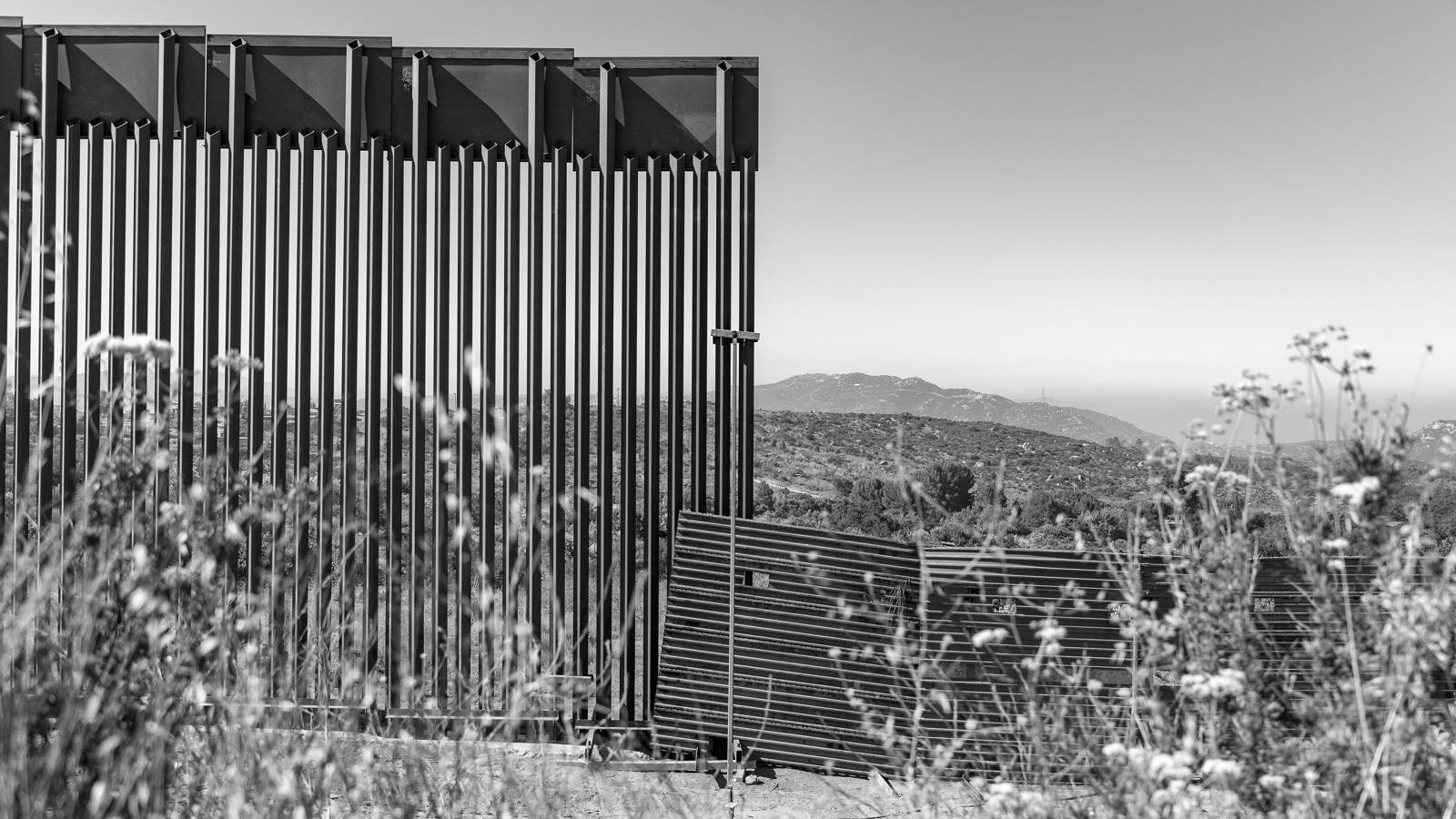
President Donald Trump’s push to reduce the population of undocumented immigrants in the United States has materialized in multiple initiatives, from plans to build a wall along the United States-Mexico border to the mobilization of the U.S. Immigration and Customs Enforcement (ICE) to identify and take custody of migrants currently in the U.S. In his newest efforts to secure the border, though, he has come to rely on a different group—the military.
Thanks to Executive Order 14167, the U.S. military has taken control of public lands along the U.S.-Mexico border. A recent expansion of these efforts means that one-third of the border will soon be represented by militarized National Defense Areas. Earlier efforts to militarize the border began in April, and by May 1, the U.S. military had taken control of over 230 miles of public land in New Mexico and Texas. Now, the military plans to militarize an additional 250 miles of land along the border, which will serve as an extension of Joint Base San Antonio, a group of three separate Texas military bases. Plans also include militarizing parts of the Arizona border.
“Our southern border is under attack from a variety of threats. The complexity of the current situation requires that our military take a more direct role in securing our southern border than in the recent past,” Trump wrote in an April 11 presidential memorandum.
While some farmers and ranchers have applauded the efforts, the increased role of the U.S. military has drawn criticism from civil rights advocates, hunters, and users of public lands, as well as legal experts.
Impacts of National Defense Areas: Consequences and Controversy
Not only do the National Defense Areas increase oversight of the U.S.-Mexico border, but they also allow immigrants who enter the country illegally to face federal trespassing charges. Along with a typical six-month sentence for illegal entry, undocumented immigrants could face up to an additional 18 months if caught in the new militarized zones.
However, it’s not just undocumented immigrants who could face consequences for trespassing—anybody who crosses into the militarized zones with unauthorized entry could be stopped and potentially detained by armed forces.
“Let me be clear: if you cross into the National Defense Area, you will be charged to the FULLEST extent of the law,” Secretary of Defense Pete Hegseth wrote on social media. “Just ask the 100 illegal aliens that have been charged so far.”
Since May, the number of migrants who have been charged for trespassing over federal lands has risen to over 1,400, the Associated Press reports. The implementation of the militarized zones has received mixed reactions from Texas and New Mexico natives, many of whom are directly impacted by the National Defense Areas and the migrant community. Many rural farmers and residents support border security efforts. Still, others worry about the restrictions that militarized zones could impose on hunters, hikers, and seasonal laborers who regularly use the land recreationally or cross the border.
Cracking Down On Illegal Immigration: Legal Loopholes
While some have been quick to criticize the implementation of the militarized zones, they are the key to a legal loophole that allows the military to play an active role in monitoring the border. The Posse Comitatus Act of 1878 prevents the military from participating in civilian law enforcement on U.S. soil; however, the creation of the National Defense Areas has allowed the Trump Administration to sidestep the law.
Typically, the seizure of federal lands for military purposes also requires Congressional approval. Still, by declaring a national emergency at the southern border, the Trump Administration has been able to bypass it. While a judge has yet to rule on the creation of the National Defense Areas, civil rights groups and local attorneys have been quick to question their legality.
“The expansion of military detention powers in the ‘New Mexico National Defense Area’—also known as the ‘border buffer zone’—represents a dangerous erosion of the constitutional principle that the military should not be policing civilians….We don't want militarized zones where border residents—including U.S. citizens—face potential prosecution simply for being in the wrong place,” said Rebecca Sheff, a senior staff attorney for the American Civil Liberties Union of New Mexico.
As legal challenges and criticism mount, it’s only a matter of time before judicial proceedings shift from local efforts surrounding individual cases to federal rulings on the legality of the National Defense Areas as a whole. These decisions are as much a check or boost to Trump’s border security efforts as a commentary on his executive powers as a whole. If the National Defense Areas are upheld as constitutional in court, so will Trump’s efforts to subvert traditional legal processes, such as seeking Congressional approval when pursuing executive action—and it’s this precedent that will ultimately define the rest of his presidency and future executive efforts going forward.