In a sharp reversal of policy, the Trump administration announced on Monday that the U.S. is committed to arming Ukraine with new weapons deliveries, mere days after initially pausing arms shipments in early July.
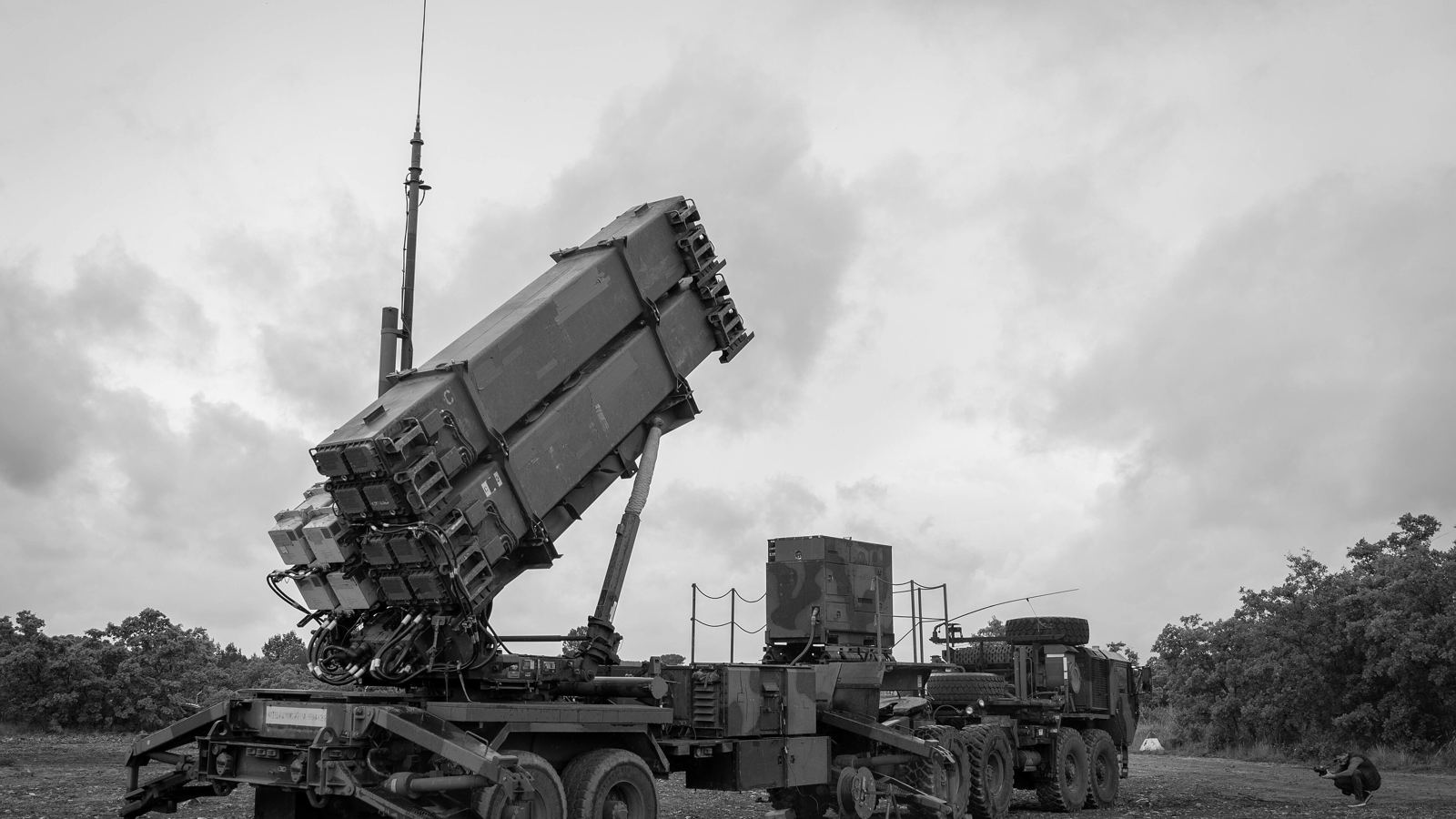
Among the promises are Patriot air defense systems, crucial for defending the skies above Ukrainian cities. As Russia steps up its air campaign, launching large barrages of missiles and drones at major population centers, advanced air defense systems like the Patriot will play a crucial role in contesting Russian air dominance. The decision comes amid growing concerns from NATO allies and members of Congress over the strategic vacuum created by the earlier pause in military aid and the President’s own growing frustrations with the Kremlin in its reserved efforts at pursuing peace. On July 14th, President Trump unveiled the policy pivot, stating that “some Patriot missile systems should arrive in Ukraine within days” and announced a 50-day ultimatum on Russian energy tariffs and secondary sanctions if a ceasefire isn’t reached.
The Patriot
The MIM-104 Patriot is one of the most advanced long-range, high-altitude air defense platforms in the world. Developed by Ratheom and fielded since the 1980s, the system has since evolved to tackle a multitude of threats, including aircraft, cruise missiles, drones, and short to medium-range ballistic missiles. The battery mainly consists of 4 key components: a high-performance radar set, an engagement station, a launching station, and interceptor missiles. The AN/MPQ-65 radar set on board is capable of tracking up to 100 targets simultaneously at ranges exceeding 100 kilometers, making it a formidable obstacle to any launched munitions.
While its numbers in Ukraine are limited, its deployment has already seen successful operations, with the most notable of which originating from reports in 2023, where a Ukrainian-operated Patriot system reportedly intercepted a Russian Kinzhal hypersonic missile - a highly experimental weapon previously thought to be unstoppable with baseline interceptors. Thus, its successful interception highlights the system’s ability to confront some of the most advanced weapons available to Moscow’s war machine. Its impressive capabilities are further cemented by its combat record in the air defense of other countries, including Israel, Saudi Arabia, Japan, South Korea, and other NATO nations.
Although the Patriot boasts an incredible track record, its costs are significant. A single battery can exceed $1 billion, depending on the configuration used, and each PAC-3 missile launched can cost anywhere between $4 million and $5 million. Given this expense, the platform is usually deployed to protect high-value intercepts, with its limited number likely further constraining its use in Ukraine.
Operational Limits and Policy Shifts
Despite the sharp recalibration in U.S. standing, the Patriots are unlikely to be game changers that shift the tide of this conflict. Its impact will ultimately be determined by the quantity that the Trump administration decides to provide Kyiv and its willingness to offer support in its maintenance and ammunition resupply. While the Patriots’ wide-ranging capabilities will offer certain relief to the hard-hit Ukrainian military, their heavy costs mean it will likely fall short of meeting the demands that modern air defense requires. In May alone, Russia launched 3835 drones, equating to approximately 124 drones per day. Given that a single Shahed drone costs around $20,000 - $50,000, it simply isn’t economically viable to use the multi-million dollar Patriot munitions to intercept these threats at scale. The Russian strategy isn’t one of technical superiority but a simple calculus of cost. Thus, at their current capacity, these interceptors would likely be reserved only for the most critical military assets, while general civilian infrastructure will continue to bear the brunt of the aerial drone assault.
Acknowledging the costly attritional reality of the battlefield, the U.S. has shifted its focus towards Russia’s economic arteries. For years, the Russian war machine has managed to stay afloat by shifting its natural gas exports from Europe to buyers in Asia such as China and India. Hence, despite heavy Western sanctions, the Russian economy grew by 4.1 percent in each of 2023 and 2024. Yet, cracks in the Russian financial architecture are beginning to show, with economic deceleration becoming increasingly evident in early 2025. Building upon this development, the Trump administration seeks to isolate the Russian economy by utilizing secondary tariffs to pressure its far more financially integrated counterparts in New Delhi and Beijing.
Russian goods only constitute around 0.09 percent of current U.S. imports, so direct tariffs would have little effect. On the other hand, secondary tariffs targeting Russia’s trade partners would be an altogether different story. The consumers of Russian oil primarily consist of economies far more dependent on global economic stability than Moscow itself. Should the full extent of secondary tariffs be imposed by the U.S. on those nations, it would impact 76 percent of American import goods. The result could cause major global supply shocks to an extent not seen since the COVID-19 pandemic. The Trump administration likely hopes that this overwhelming economic maneuver will foster internal pressure within the Kremlin’s commercial partners, whose intent on avoiding this outcome will culminate in political posturing aimed at pushing Russia toward Washington’s demands.
Whether these countries will act as the U.S. hopes is yet to be seen. While skeptics might scoff at the idea of such drastic economic weaponization, the recent ad hoc approach to tariffs from Washington and its strike at Iranian nuclear facilities should make any nation think twice before testing the U.S.’s patience. However, even if said measures fail, signs of economic slowdown within Russia’s wartime economy still remain constant and growing in severity. Even if Moscow decides to push through the latest rounds of external pressure, its internal volatility may prove more potent than any foreign measures. The U.S., for one, can simply reinforce Ukraine with more weapons to drag out the conflict until Putin is forced to the negotiating table from within. In either scenario, it does not behoove the Kremlin to drag out this conflict.