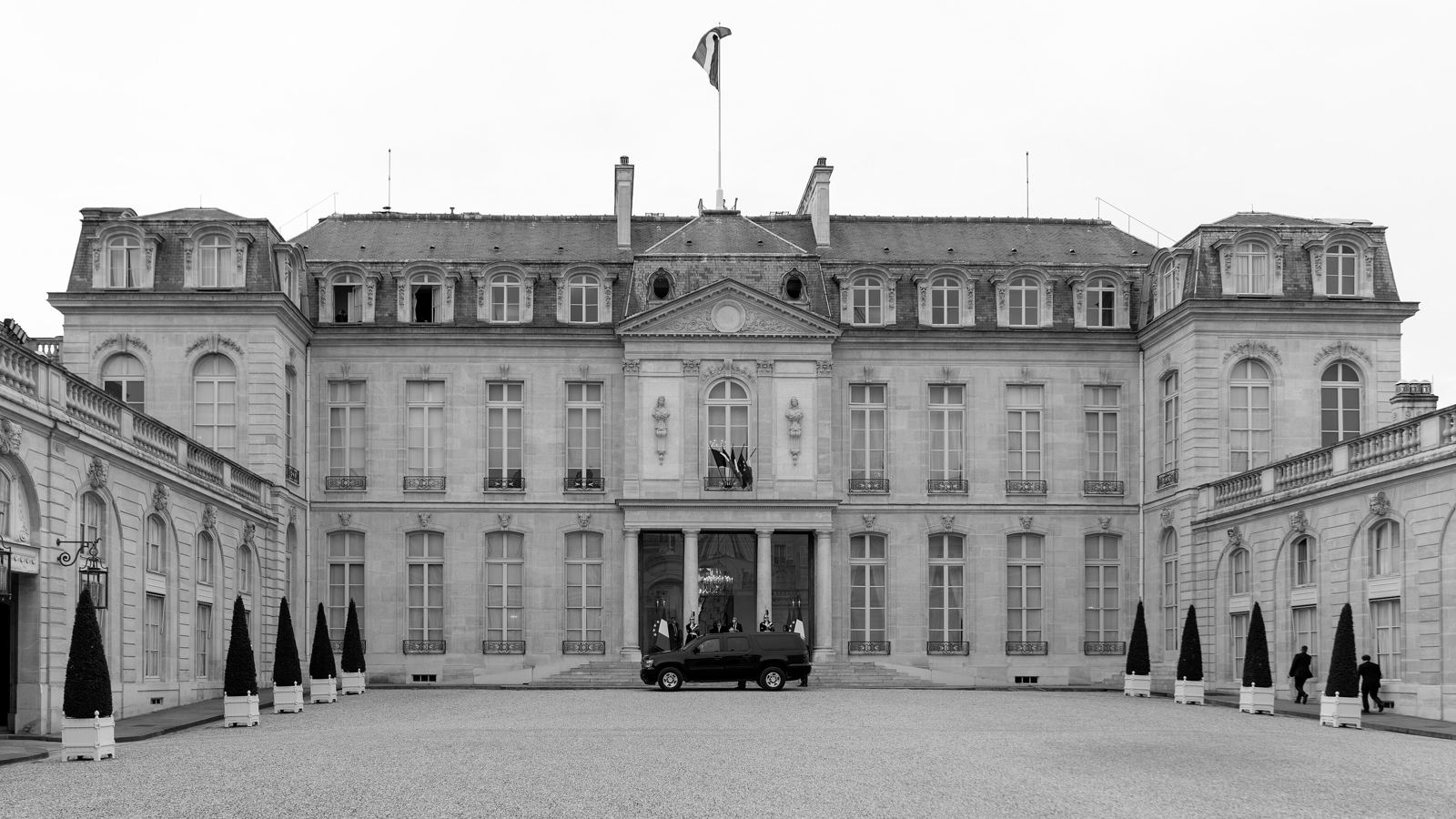
United States President Donald Trump has recently released two letters threatening to impose a 30% tariff on European Union (EU) imports starting August 1. The move is intended to pressure the EU into compliance, with Trump warning that any retaliation could prompt additional tariffs. In response, French President Emmanuel Macron has urged the EU to “defend European interests resolutely” in the face of these potential tariffs. While some EU leaders, particularly in Berlin and Brussels, have publicly projected calm, emphasizing restraint and dialogue, a sense of urgency remains. European Commission President Ursula von der Leyen has stated the bloc is willing to continue negotiations with the Trump administration to extend the suspension of countermeasures. Macron, however, has underscored the need for the EU to be prepared for a potential trade war, signaling a preference for projecting strength over waiting passively for a crisis to escalate.
HOW WE GOT THERE
Macron’s remarks, made during a recent EU summit, reflect growing concern that a second Trump administration could revive protectionist trade policies that previously strained EU–US relations between 2018 and 2020. In 2018, during his first term, Trump imposed sweeping tariffs on European steel and aluminium, igniting a small-scale trade war. The EU responded by targeting iconic American exports, such as Harley-Davidson motorcycles and Kentucky bourbon, demonstrating that the retaliation was both symbolic and strategically calculated. Notably, the EU was Harley-Davidson’s second-largest market, and the tariffs served as a pointed economic counterpunch.
Though many of these tariffs were suspended under the Biden administration, the prospect of their return has reignited concern across European industries. Macron’s current stance aligns with the EU’s broader agenda of pursuing “strategic autonomy,” a policy that seeks to strengthen the bloc’s independence in sectors like defense, energy, technology, and trade. The tariff dispute has thus become a catalyst for advancing the EU’s goal of reducing its reliance on external powers and defining policies based on its own long-term interests.
WHAT’S HAPPENING NOW
Macron has voiced “very strong disapproval” of what he sees as the EU’s overly cautious response. He criticized the proposed US tariffs as “brutal and unfounded,” arguing that trade imbalances cannot be corrected through aggressive protectionist measures. He also warned that the US economy would ultimately suffer as a result, noting that the US is France’s fourth-largest export destination and fifth-largest supplier. Despite France’s significant trade ties with the US, Macron emphasized that the EU must prepare credible countermeasures in case a negotiated agreement cannot be reached by August 1. In a meeting with French industry leaders, Macron even suggested suspending investments in the US until further clarity is achieved, indicating a serious escalation in France’s response. His assertiveness signals France’s increasing push for a more muscular EU trade policy.
While countries like Spain have expressed support for Macron’s tough stance, others—most notably Germany have urged caution. German officials have expressed concern that escalating tensions could harm major exporters and lead to broader economic fallout. Former Danish prime minister and now Denmark’s foreign minister also stressed the importance of a unified and measured EU response, stating that avoiding a full-blown trade war remains in everyone’s interest.
Meanwhile, Commission President von der Leyen confirmed that the EU is closely monitoring the situation and preparing contingency plans. “We want to send an unmistakable message that the EU is serious about defending its economic interest,” she said while also emphasizing the need for restraint. Across the board, both businesses and policymakers are advocating for a negotiated resolution to ease trade tensions and prevent further harm to the global economy. The challenge now lies in balancing unity, firmness, and diplomacy as the August 1 deadline approaches.
BROADER IMPLICATIONS AND NEXT STEPS
By the time Macron’s stance gains traction, it could mark a turning point for the EU's approach to the international trading system, making it rather assertive than reactive. Analysis suggests that the division in the Western Bloc may strengthen China’s impact on the norms of international trade, considering China as the largest export market for US products. On the other hand, others argue that the EU may be the third pole in the global economy that is no longer dependent on the American or Chinese markets. Europe has been talking about economic sovereignty for years since the 2000s, and with its evolving position on international cooperation, the EU may be ‘forced’ to act on it now.
The European Commission is expected to start internal discussions over possible trade negotiations and defense instruments this year, especially if Trump’s retaliatory campaign intensifies. The retaliatory tariffs will continue to threaten strategic French industries such as spirits and luxurious goods, further impacting exports, job creation, and economic expansion. President Macron’s demands for a response that highlights the commitment France brings to protect its interests. Whether Macron’s call leads to a more assertive trade strategy or sparks new divisions could define the future of transatlantic economic relations. Next month, leading to the August 1 deadline, sustained and strategic measures are essential for France and Europe to govern collective advancements in the European trade system.