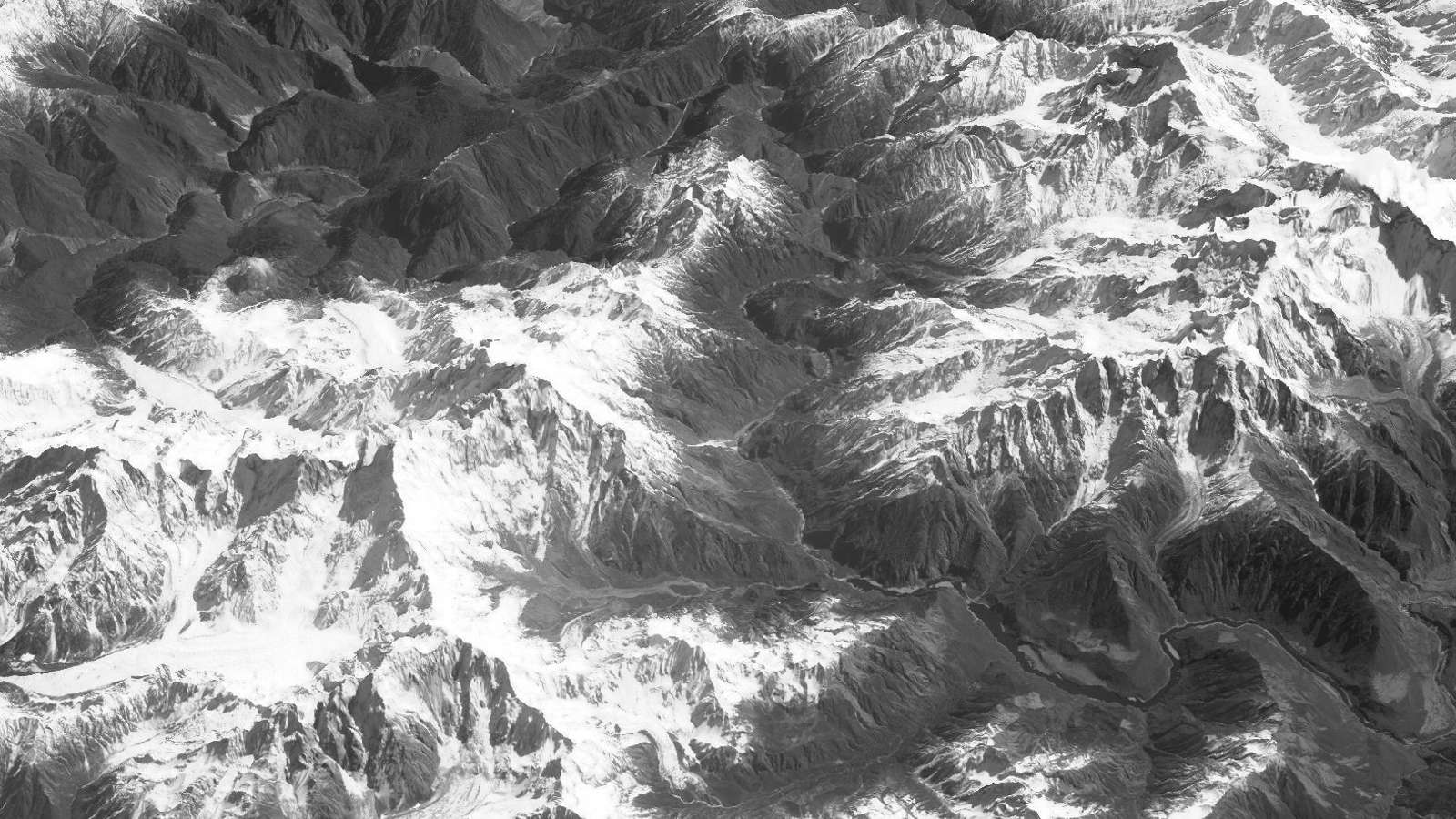
China has officially broken ground on what is projected to be the world’s largest hydropower plant. The Medog (Motuo) project — first announced in late December of 2024 — is expected to produce up to 300 billion kilowatt-hours of energy per year, which is nearly three times the energy output of the Three Gorges Dam — already the world’s largest power plant by installed capacity.
Construction on the 1.2 trillion yuan ($160 billion) project is currently underway in what is said to be the world’s deepest and longest canyon on land. Located on a portion of the Yarlung Tsangpo, the Tibetan Plateau’s most significant river, its geographic location has given way to international criticism over the dam’s implications, even as the Chinese government claims that the project — with careful planning — will produce environmental and economic benefits for those in the region.
The history of dams in Tibet
After the 1951 Chinese annexation of Tibet, widely considered to be illegal and forceful by the Tibetan people, the Chinese government has become increasingly interested in Tibet’s unique geography and natural resources. As many of Asia’s most significant rivers originate in the heart of the Himalayas, Chinese expansion of hydroelectric power production has been extensive over the past 70 years. Chinese President Xi Jinping has called for this expansion in a policy called xidiandongsong (sending western electricity eastwards).
Since 2000, the Chinese government has built or planned over 193 hydropower projects, often triggering forced displacement, destruction of cultural sites and heritage, and significant ecological destruction. The Three Gorges Dam, much smaller in scale than the Medog project, displaced over 1.3 million people. And during the proposed development of the Khamtok (Gangtuo) hydropower project, the Chinese government planned to displace over 4,000 Tibetans and reportedly ignored the presence of villages and monasteries in their plans. While a letter from the Chinese government to the United Nations denied any wrongdoing and promised full consultation with Tibetan locals, protests erupted over the plans and were met with violent suppression.
Similarly, the Chinese government claims that all risks — including forced displacement, destruction of cultural heritage, and especially natural disasters, including earthquakes and landslides — have been thoroughly evaluated and addressed. Additionally, the state media has described these dams as an extremely effective, clean energy solution that reduces pollution while improving access to clean water for rural Tibetans. However, the planned Medog reservoir may also make the region more vulnerable to dangerous flooding, as exemplified in a 2018 case where a series of glacial collapses and floods significantly damaged local infrastructure.
As Chinese policy toward Tibetan resources becomes increasingly exploitative, it accompanies a wide range of domestic human rights abuses, especially in violating the autonomy of minority ethnic groups. However, these concerns — especially environmental and economic — have spilled over the border into China’s southern neighbors.
“An existential threat to our tribes and our livelihoods”
The Yarlung Tsangpo is the source of several major rivers, including the Siang, Brahmaputra, and Jamuna rivers, which flow through Bangladesh and India’s Arunachal Pradesh and Assam. Its largest tributary, the Brahmaputra, accounts for nearly 30 per cent of India’s freshwater resources, and remains a significant source of China-India tensions. Even so, an analysis by the United States Institute of Peace (USIP) posits that conflict over the water used from the river will likely not evolve into a large conflict, given that the Yarlung Tsangpo contributes only a limited amount to the flow of the river and much of the water it holds comes from downstream rains. However, in the words of the USIP, “the Brahmaputra is and will continue to be intimately connected to Sino-Indian tensions largely through the use of water infrastructure investment as a form of territorial demarcation and control.”
Even so, as tensions continue to develop over the Medog project, Indian leaders have raised concerns over the dam’s potential to control and even weaponize the flow of water. Arunachal Pradesh chief minister Pema Khandu has expressed concern that the Siang and Brahmaputra could “dry up considerably” following the completion of the dam, adding that the dam will “cause an existential threat to our tribes and our livelihoods. It is quite serious because China could even use this as a sort of ‘water bomb’”. In addition to water, Columbia professor Michael Steckler has raised concerns that the Medog dam will prevent sediment from freely flowing downstream, impeding local agriculture.
The Chinese Ministry of Foreign Affairs states that they have “conducted necessary communication with downstream countries regarding hydrological information, flood control, and disaster mitigation cooperation related to the Yarlung Zangbo project.” However, in response to the potential impacts of the dam, the Indian government has proposed two of its own hydroelectric projects on the Siang river, in part to control the flow of water and prevent flooding as a result of sudden water releases further upstream. One, the Upper Siang Hydroelectric Project, is projected to produce up to 11 gigawatts, and will be India’s largest if construction proceeds.
Chinese foreign policy
These concerns over rivers, hydroelectric plants, and the flow of water are just one part of the larger and longer-standing geopolitical disputes between China and India. The two nations have long conflicted over territorial claims, including Arunachal Pradesh, which China claims as its territory. Given limited agreement over border demarcations, the hydropower project could be seen as a way of asserting control in the heavily contested region. An analysis of the conflict by the Lowy Institute, an Australian think-tank, suggests that maintaining Chinese governance over Tibet and its hydrological resources depends on its projected power into disputed territory.
Additionally, while China is the world’s largest emitter of greenhouse gases, it is also the global leader in renewable and clean energy. In 2025, roughly 35% of the country’s energy was produced via renewable methods, 37% of which came from hydropower development. China’s developments in clean energy technologies since the year 2000 — including solar panels and wind turbines — have since placed it ahead of the United States. China is currently “winning” the race for clean energy with its control over rare earth materials necessary to make electric cars and wind turbines. Regardless of their environmental, social, and geopolitical risks, each hydroelectric project like the Medog plant moves China towards global clean energy dominance.
Thus, as China attempts to elevate itself as the premier clean energy power and exert its power in the region via hydroelectricity, strife — both domestic and international — continues to build. While Tibetans face the threat of forced displacement, cultural destruction, and exacerbated natural disasters, the implications of China’s hydrological policy seep downstream, inflaming deep-rooted geopolitical conflicts.