When Alexander Hamilton first advocated for the addition of a strong judicial branch to aid our Federal government in his Federalist No. 78 essay, he made the argument that the judiciary has “neither force nor will, but merely judgment.”
However, nearly 250 years after the publication of Federalist No. 78, the judicial branch has come to occupy a unique role in American politics and society—one that has not only become increasingly politicized but has come to exercise considerable force and will over the United
States’ political landscape.
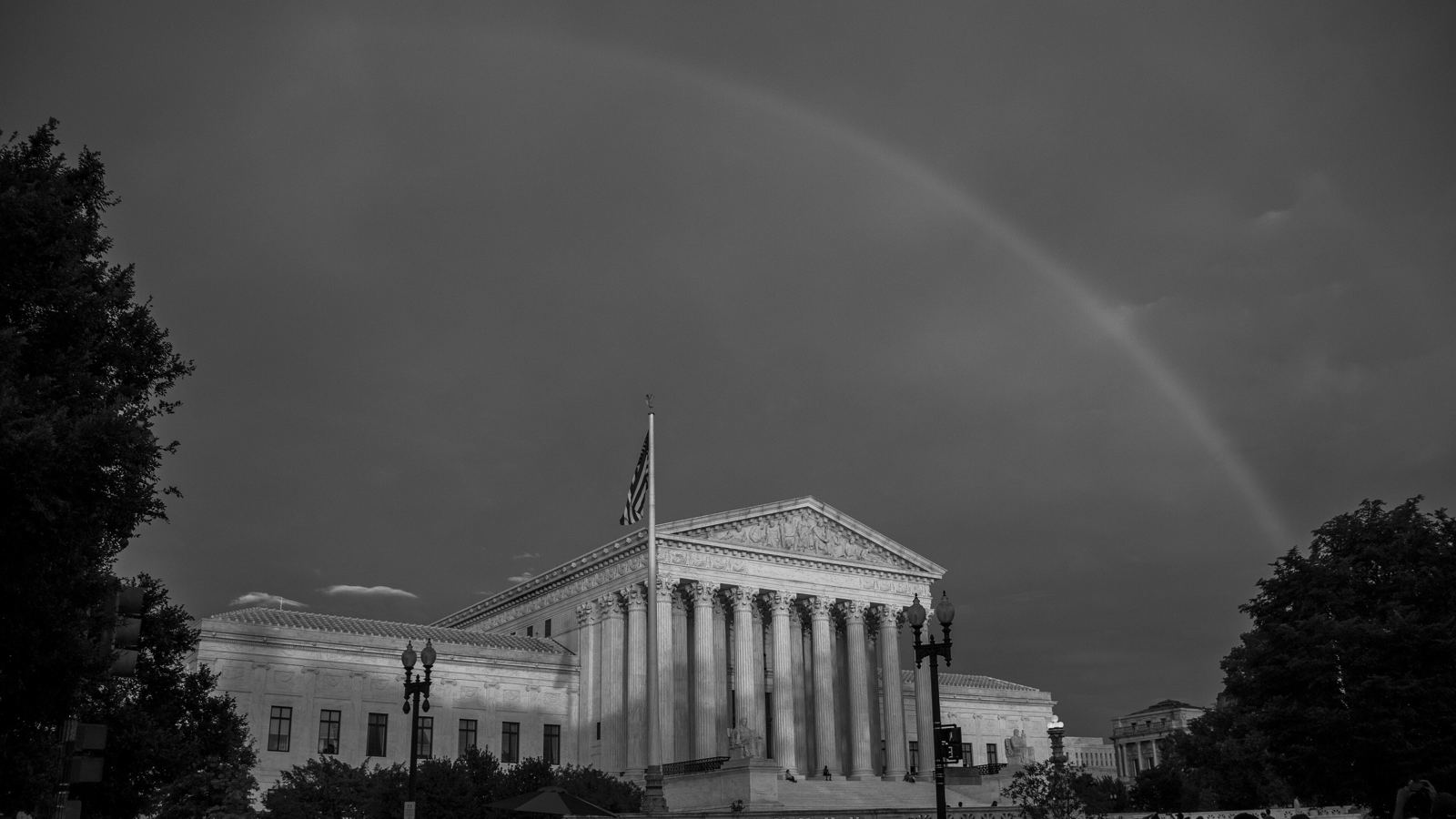
The U.S. Supreme Court stands at the heart of the American judicial system. As it has evolved to assume a more powerful role in society, its perception has also changed. From contentious recent cases to the growing partisan divide, the Supreme Court’s role under the spotlight has earned it a controversial view from the public.
A Court Divided: Partisan Ideology Takes Center Stage
The Founding Fathers hoped that the Supreme Court would serve as a nonpartisan anchor amidst shifting political tides, with the primary goal of interpreting and applying the Constitution to law. However, it has increasingly become a partisan battleground, and both Democrats and Republicans have taken advantage of justices’ life-tenure positions to influence Constitutional law far into the future.
The shift towards a partisan focus on the Supreme Court most visibly surfaced with former President Ronald Reagan’s nomination of Robert Bork to the Supreme Court. Despite Bork’s experiences working for federal courts and the Justice Department, his judicial ideology, which focused on a strict interpretation of Constitutional law, stirred dissent among opponents, leading his appointment to be blocked by the Senate with a 58-42 vote, which stands as the most significant margin of a failed Supreme Court nomination.
While ideology had played a role in previous nominations, Professors Leonard Gross and Norman Vieria note that “this focus on ideology raised a crucial question as to whether it was proper to reject an otherwise qualified nominee for ideological reasons. The rejection of judicial nominees on this basis has important implications for judicial independence and public confidence in the federal courts.”
Thanks to three strategic appointments by President Donald Trump, the Supreme Court currently displays a conservative lean, and public opinion reflects this. According to a recent Associated Press-NORC Center for Public Affairs Research poll, while just 8% of Republicans view the Court in a negative light, 30% of independents and 56% of Democrats also do. Gaining an ideological majority has increasingly become a goal for both parties, disturbing the traditionally nonpartisan nature of the Court.
Recent Cases: From Roe Onward
Beyond the justices themselves, though, recent Supreme Court cases have attracted controversy that has significantly damaged the Court’s public perception.
Following the overturn of the landmark Supreme Court case Roe v. Wade with Dobbs v. Jackson Women’s Health Organization in 2022, which effectively eliminated the constitutional right to abortion, 43% of adults in the U.S. reported having “hardly any confidence at all” in the Supreme Court. While that number has now dropped to around a third of adults, the court’s conservative stance surrounding key issues has continued to spark discontent among many liberals.
Recent Supreme Court cases have only served to alienate the Court from the public even more. Even though the Court leans conservative and a third of the current justices were appointed by Trump, the Court has played the problematic role of reigning in many of the Trump Administration’s actions, including its ruling blocking Trump's attempt to end birthright citizenship and its order to the Trump Administration to facilitate the return of a wrongly deported man.
Between dissent from civilians and pressure from the government, the Supreme Court has come to assume a unique role in the spotlight where it must balance ideology with adherence to the rule of law and commitment to civilian liberty with government duty. With recent efforts stripping lower federal judges of some of their traditional injunction powers, the Supreme Court only stands to gain more influence. How it chooses to use it, though, could have a monumental impact on how it continues to be perceived.